
Comparing virtual screening services without clear details on model transparency, pricing, or project fit takes too much trial and error. Many alternatives keep pricing hidden, restrict access to proprietary tools, or limit their support to only early discovery instead of the complete workflow. You can pick a virtual screening provider with the level of access, scientific support, and pricing clarity your discovery team actually needs.
Table of Contents
Innova Biotech Solutions

At a Glance
A proprietary database underpins their custom protein and peptide designs. Innova Biotech Solutions was founded in 2024 and is based in San Francisco, California. The agency combines computational modeling with tailored project teams to support drug discovery, enzyme engineering, and chimeric protein projects.
Core Features
Innova Biotech delivers tailored bioinformatics services that cover virtual screening, protein and peptide design, and enzyme optimization. Their virtual screening emphasizes off target interaction prediction to reduce downstream risk. The firm performs chimeric protein engineering with domain selection, linker design, and structural prediction. They operate with end to end encryption and strict access controls to protect client data. The team includes specialists in structural bioinformatics and computational modeling.
Key Differentiator
The firm uses a proprietary database paired with advanced computational modeling to craft highly customized protein solutions. That combination lets them prioritize client specific sequence space and structural constraints during design. Their messaging also highlights a formal focus on confidentiality and infrastructure security for sensitive projects.
Pros
-
High customization level for discrete research goals. This matters when you need designs tuned to a particular assay or expression system.
-
Deep expertise in structural bioinformatics and computational modeling. The team can translate structural hypotheses into testable designs.
-
Broad technical scope across virtual screening, enzyme engineering, peptide design, and chimeric protein development. You can keep discovery and early optimization work within one vendor relationship.
-
Security controls designed for sensitive data handling. Their approach to access controls and infrastructure security reduces IP exposure during collaboration.
Cons
- Pricing is not specified publicly and is likely quoted per project, which may make small exploratory efforts comparatively expensive.
Who It's For
Research groups and biotech companies that require bespoke protein or peptide design with strict confidentiality needs will find this agency relevant. Teams with clear experimental endpoints and budgets for outsourced computational work are the best match. Early stage teams without funding for custom engagements may find the model a poor fit.
Unique Value Proposition
Their proprietary database lets project scientists narrow candidate sequences before intensive modeling. That reduces wasted compute time and keeps iterative cycles focused on viable chemotypes. For programs that must protect IP while iterating designs, their security practices and specialist team reduce administrative friction during handoffs.
Real World Use Case
A pharmaceutical discovery team contracted Innova Biotech to run virtual screening and then design stable therapeutic peptides. The agency used its database to prioritize scaffolds, ran structural modeling to improve stability, and delivered sequences ready for synthesis and in vitro testing. The engagement shortened internal design cycles by keeping modeling and design under one contract.
Pricing
Pricing is not listed on the website. The firm states that quotes are customized to project scope, technical depth, and data security needs. Expect project pricing rather than fixed monthly plans for design and engineering contracts.
Website: https://innovabiotech.com
Aurlide
At a Glance
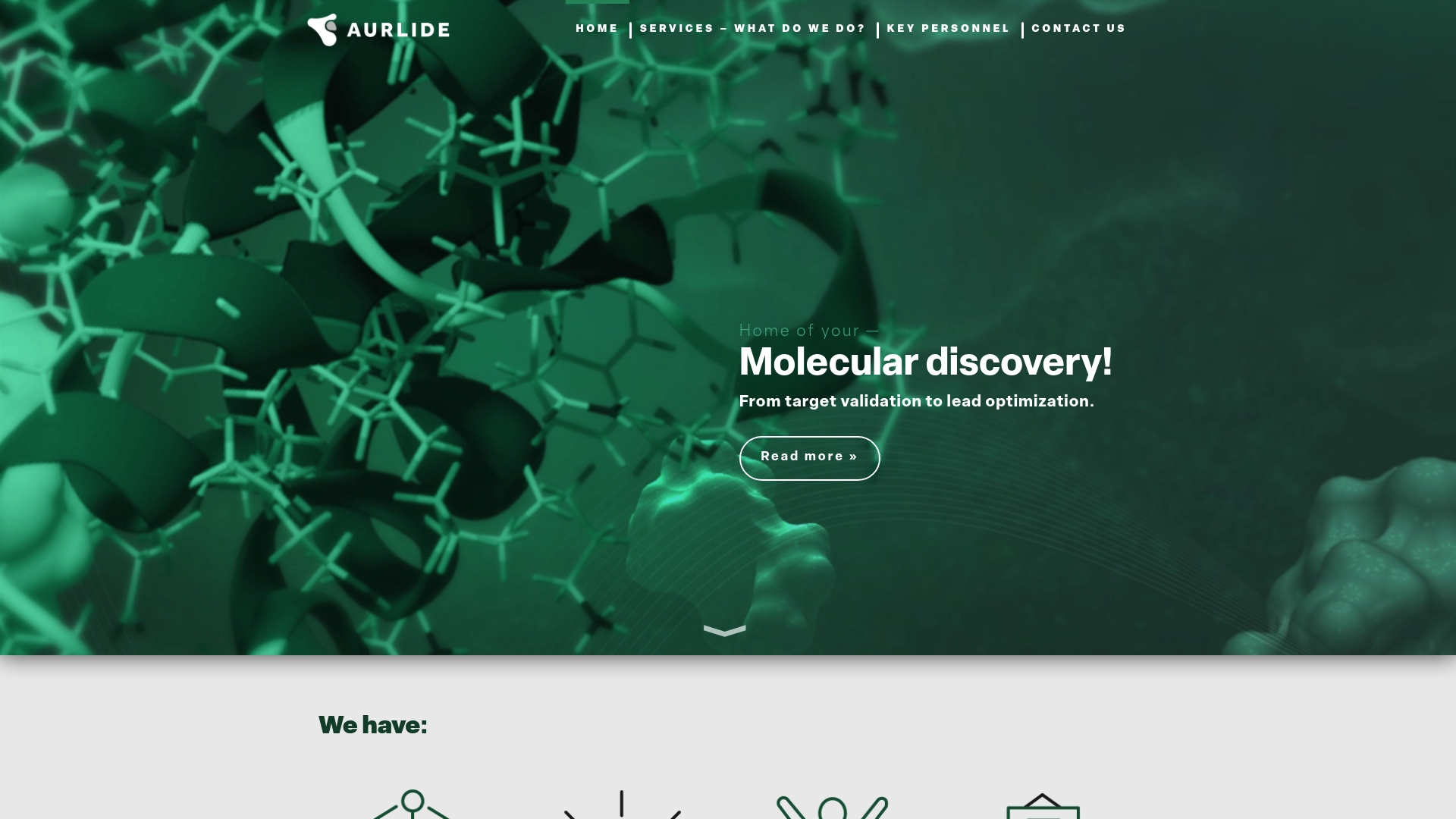
Aurlide's marketing materials state their proprietary vHTS produces a high hit rate and has supported the development of clinical candidates. The company focuses on early discovery work from target validation through hit to lead optimization. They also report a publication and patent record that supports their technical approach.
Core Features
Aurlide offers target validation support and end to end lead optimization services for early discovery projects. Their virtual high throughput screening workflow aims to expand chemical space and find novel hits. They provide hit expansion and diversification services to increase scaffold variety. The team also advises on preclinical species selection and binding mode analysis for candidate selection.
Key Differentiator
The vendor advertises that its proprietary vHTS technology yields a higher first in class hit identification rate than standard virtual screens. That technology and the company publication record are the primary differentiators. The offering is oriented toward teams that need computational and medicinal chemistry input rather than full development programs.
Pros
-
High initial hit discovery focus. Aurlide claims a strong hit rate that helps uncover novel scaffolds for challenging targets.
-
Deep medicinal chemistry support. The team offers hands on hit expansion and lead optimization advice tied to computational outputs.
-
Experience moving candidates forward. The company reports involvement in projects that reached clinical candidate status and licensing.
-
Research output and intellectual property. Publications and patents provide an audit trail for methods and techno logy choices.
-
Customized project scope. Services are tailored to client needs, from single target studies to multi compound campaigns.
Cons
-
Pricing is not public. The lack of published fees makes budgeting for exploratory projects harder.
-
Limited platform access details. There is little explicit information about client software or portal access for running or reviewing vHTS results.
-
Narrow service window. The group focuses on early discovery and does not offer full clinical trial or late stage development services.
When It May Not Fit
If you need end to end development through clinical trials, Aurlide is not the right choice. Their scope centers on early research and preclinical decision support. Teams that require transparent fixed pricing or an on premise computational platform may find the vendor a poor fit.
Who It's For
Pharmaceutical and biotech R and D teams working on early drug discovery projects will get the most from Aurlide. Small to mid size companies with limited in house vHTS or medicinal chemistry capacity benefit most. Academic groups seeking industry style hit expansion may also find the service useful.
Real World Use Case
A biotech startup contracted Aurlide to accelerate hit discovery for a rare disease target. The vendor applied its vHTS workflow to expand chemical matter and recommend candidates. The engagement produced leads prioritized for preclinical species selection and binding mode experiments.
Pricing
Pricing is not listed on the public site and the product data marks pricing as informational only. Expect custom project quotes and research agreements rather than off the shelf rates. Contact the vendor for a written proposal tied to project scope and deliverables.
Website: https://aurlide.fi
Plebiotic
At a Glance
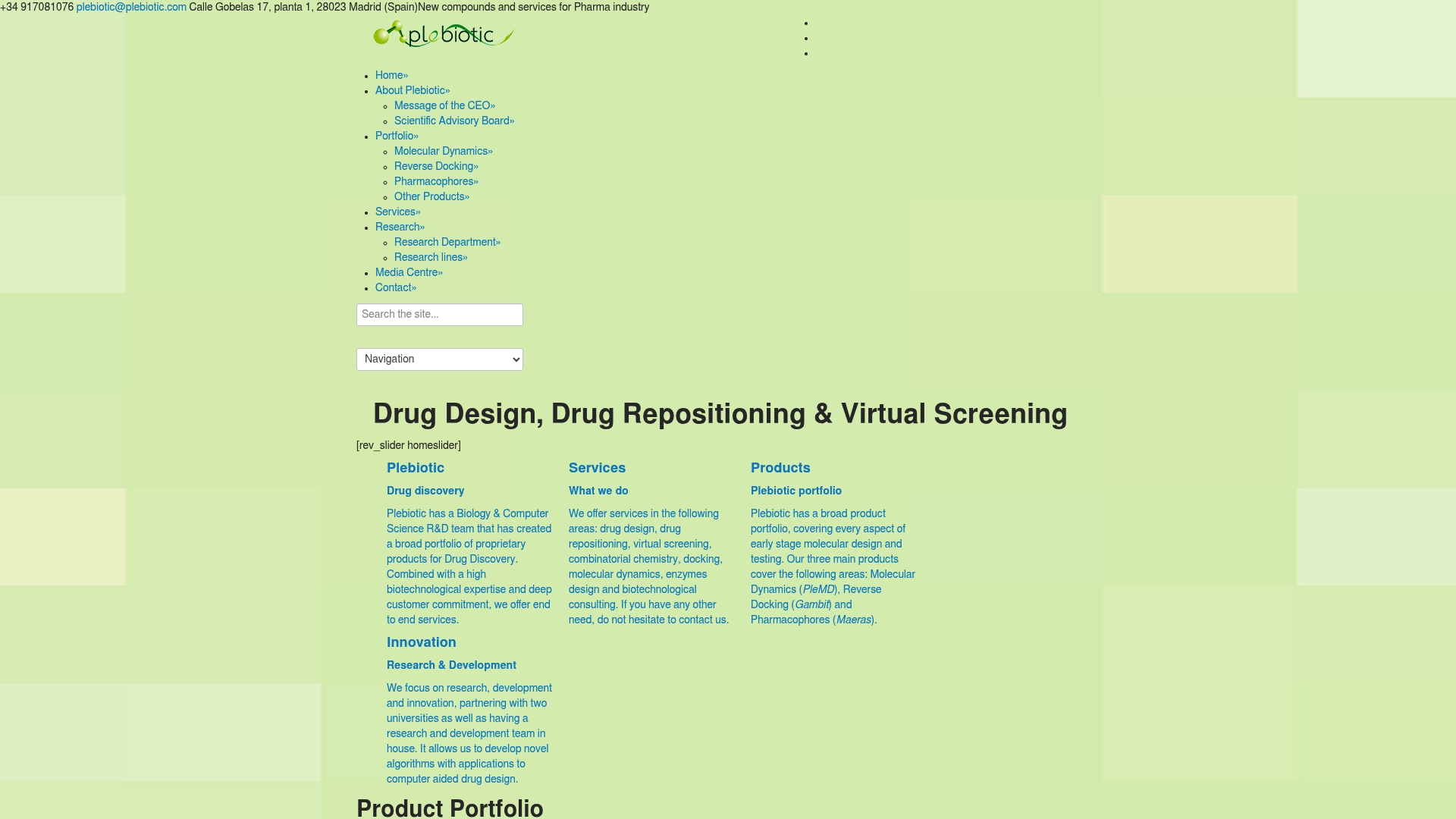
Plebiotic pairs an academic research team in biology and computer science with a suite of molecular modeling tools. The company lists proprietary products for molecular dynamics, reverse docking, and pharmacophore modeling. Their offering reads like a research lab turned software provider focused on early stage drug design.
Core Features
Plebiotic offers end to end drug design services and software for early discovery workflows. Key capabilities include virtual screening, combinatorial chemistry, docking, and molecular dynamics. The product portfolio centers on PleMD, Gambit, and Maeras for simulations, reverse docking, and pharmacophore workflows. The team also sells enzyme design and biotechnological consulting to translate models into lab tests.
Key Differentiator
Plebiotic combines proprietary algorithms with formal academic partnerships to refine models against current research. That pairing aims to shorten the gap between algorithm research and applied simulations for pharma R&D teams. The result is a set of tools and services tuned for hypothesis generation and preexperimental triage rather than for general purpose cheminformatics.
Pros
-
Custom end to end solutions. Plebiotic reports tailored services that span algorithm development to applied testing, which helps teams that need project specific support.
-
Strong ties to academia. The vendor highlights research partnerships that feed new methods into the product line and protocol development.
-
Proprietary modeling tools. The suite claims specialized modules for molecular dynamics, reverse docking, and pharmacophores that work together for early stage candidate evaluation.
-
Industry experience in pharma R&D. The team lists practical work with drug discovery workflows and enzyme design, which reduces translational friction from model to experiment.
-
Consulting services included. Plebiotic pairs software with consulting to help adapt workflows for experimental validation and scale up.
Cons
-
Pricing and scalability are not specified. That creates uncertainty for teams budgeting for software licenses or larger simulation runs.
-
Limited public reviews. There is sparse third party feedback available, which makes vendor evaluation harder for procurement teams.
-
Integration path unclear. The documentation does not detail connectors or APIs for common lab informatics systems, which may slow adoption.
When It May Not Fit
Plebiotic may not work for small teams that need clear subscription pricing or self serve software. Organizations that require off the shelf integrations with enterprise LIMS or large compute orchestration may find the integration story thin. Groups without dedicated computational expertise could struggle to operate advanced modules without consulting support.
Who It's For
This product fits pharma R&D teams and biotech researchers focused on early stage molecular design and testing. It suits groups that value academic collaboration and bespoke modeling over turnkey commercial suites. Research institutions that want vendor support plus access to specialized algorithms will find the offering aligned to their needs.
Real World Use Case
A pharmaceutical company runs PleMD to simulate ligand stability under physiological conditions before investing in synthesis. Scientists use the simulation results to prioritize candidates for in vitro assays. The consulting team helps map simulation thresholds to experimental success criteria.
Pricing
Pricing is listed as not applicable and the offering appears informational only. Prospective buyers should contact Plebiotic for project quotes and licensing details. Expect a vendor consultation to define scope, compute needs, and commercial terms.
Website: https://plebiotic.com
Chemspace
At a Glance
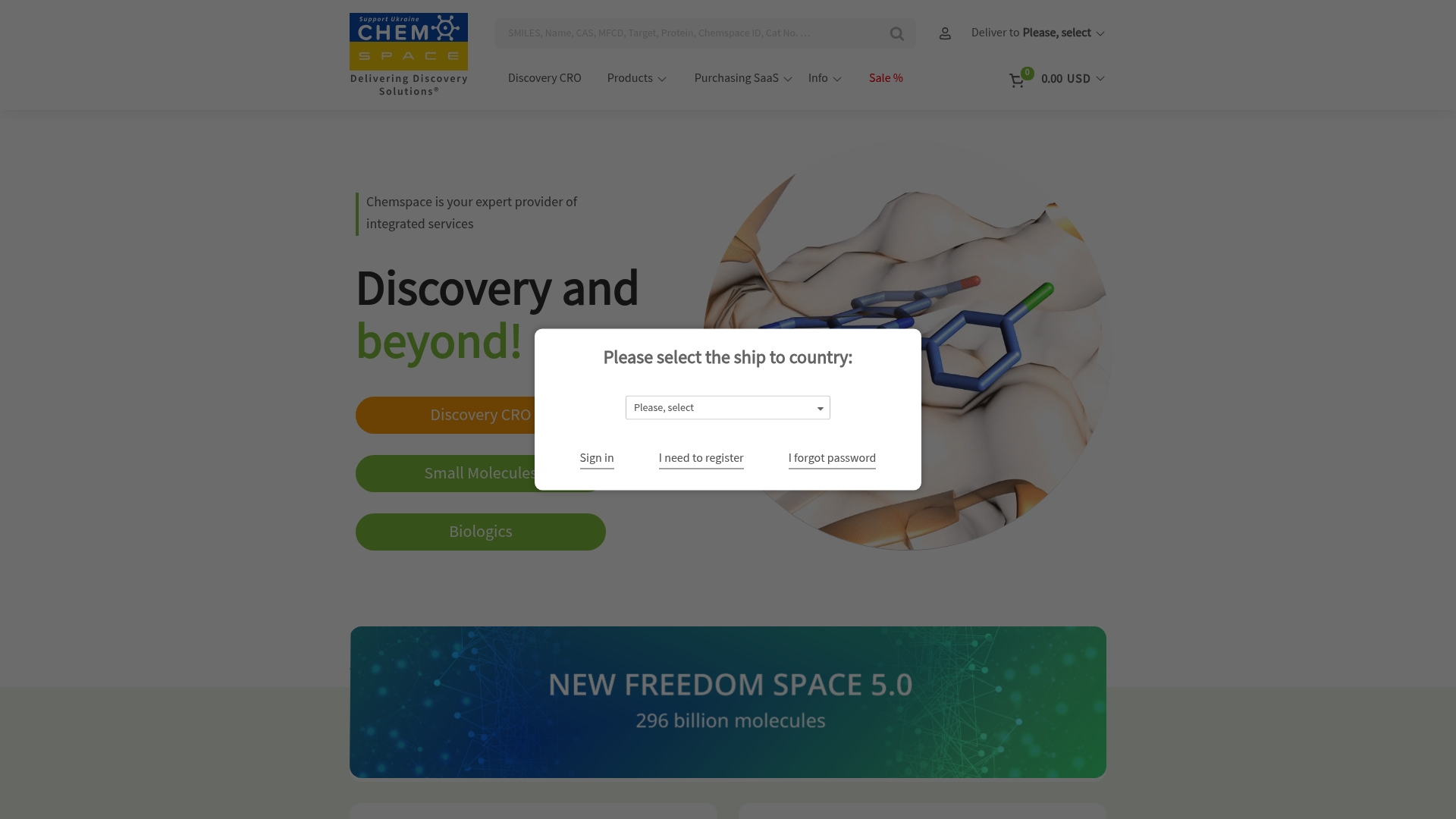
Chemspace reports access to over 50 billion molecules. That scale aims to give medicinal chemists a single query point for wide chemical space exploration. The platform links virtual hits to real procurement and synthesis paths, which speeds moving a computational hit into an orderable sample.
Core Features
- Access to billion-scale chemical spaces including vendor collections and enumerated libraries. This centralizes search across diverse compound pools.
- Compound sourcing and procurement workflows, with punchout and standalone portal options for purchasing. Those options help connect discovery teams to suppliers.
- Library design and custom synthesis services for small molecules, peptides, oligonucleotides, proteins, and antibodies. You can design and then order bespoke libraries.
- Computational tooling and data integration via the Chemspace API and KNIME nodes for virtual screening and workflow automation.
Key Differentiator
Chemspace combines very large searchable chemical collections with direct sourcing and synthesis support. The claim above about scale backs a workflow that moves from virtual screening to physical compound procurement without switching platforms. That single-vendor path reduces the manual work of translating SMILES hits into vendor orders.
Pros
-
Extensive chemical coverage. The searchable universe aims to surface rare or novel scaffolds that smaller catalogs miss.
-
End-to-end sourcing and synthesis. You can take a virtual hit through library design then request custom synthesis from partner vendors.
-
API and workflow integration. The vendor supplies an API and KNIME nodes so you can embed queries into existing computational pipelines.
-
Flexible procurement options. Punchout and standalone portal choices let procurement teams use existing purchasing systems or the platform directly.
-
Global supplier network. Multiple vendors increase the chance a requested compound is available or competitively priced.
Cons
-
Platform complexity for new users. The number of features and procurement options creates a learning curve for teams without procurement experience.
-
Longer lead times and higher costs for large custom synthesis projects. Custom biology and chemistry work depends on external vendors and capacity.
-
Limited in-house experimental assays. The platform focuses on chemical data, sourcing, and synthesis rather than running biological screens internally.
When It May Not Fit
If your team needs in-house biological screening or rapid assay development, this platform is not a match. Large discovery groups with existing vendor contracts and internal assay capacity may find procurement workflows redundant. Projects with tight timelines for custom synthesis should budget extra time for vendor-dependent delivery.
Notable Integrations
- Chemspace API for programmatic access to catalogs and order metadata.
- KNIME nodes for embedding searches and filters into visual workflows.
- Custom procurement portals and punchout connections for enterprise purchasing systems.
Who It's For
Medicinal chemists, research scientists, and biotech R&D teams that need broad chemical space searches plus an ability to order or synthesize hits. Chemical data scientists who want to automate library generation and vendor queries will also find the integration options useful.
Real World Use Case
A biotech team hunting kinase inhibitors uses the search tools to pull novel scaffolds. They design a focused library, run docking through KNIME, then route selected compounds to sourcing and custom synthesis partners. The process moves from in silico hit to an orderable sample using one platform and vendor network.
Pricing
Pricing is variable and service dependent. General catalog access appears informational while paid options cover procurement workflows, custom synthesis, and DNA encoded library services. Contact Chemspace for project quotes and procurement integration pricing.
Website: https://chem-space.com
Recursion
At a Glance
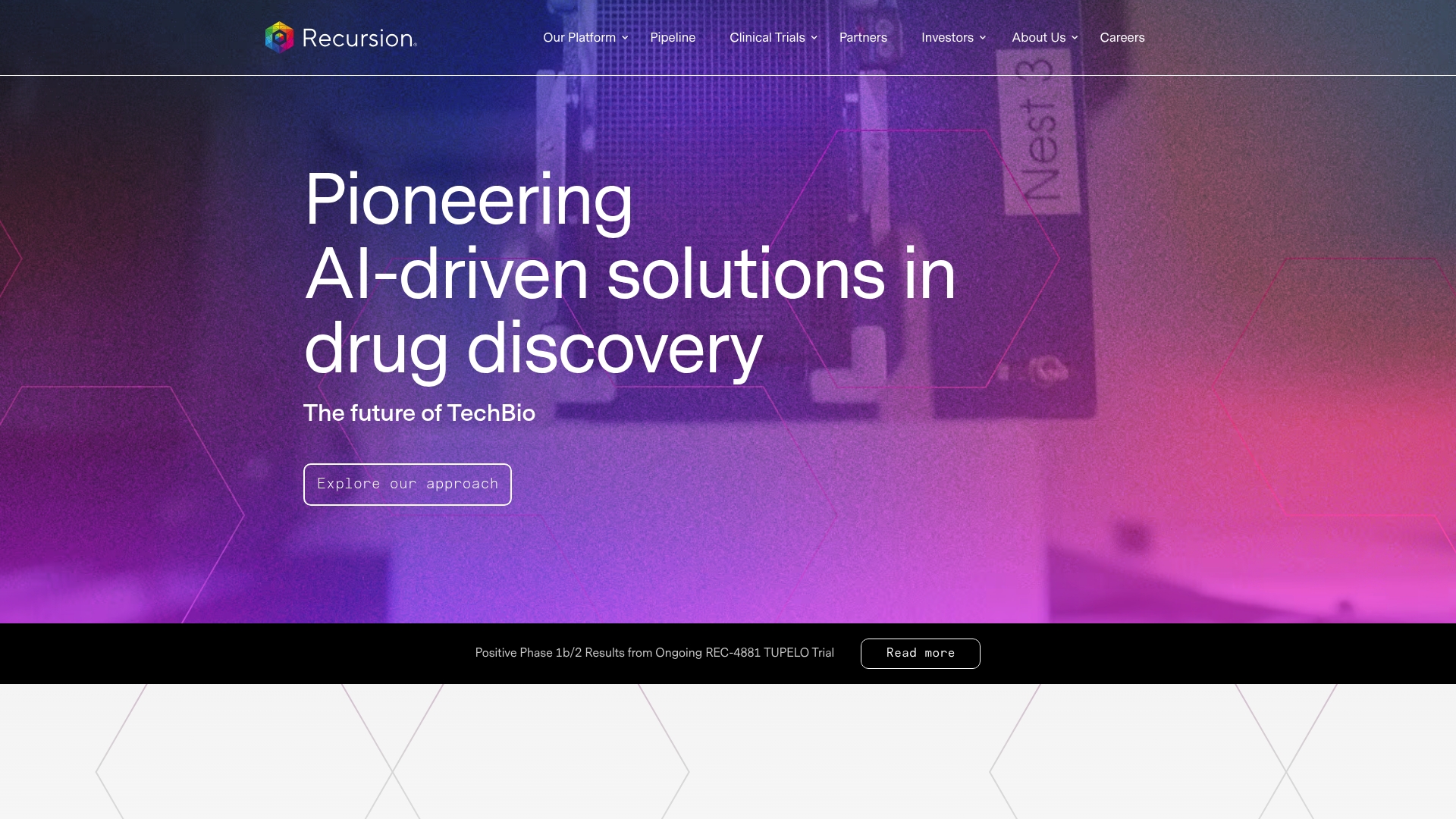
Recursion reports more than 50 petabytes of biological and chemical data. This scale feeds large models and image analysis pipelines that operate alongside an automated wet lab. The company pairs that dataset with robotics and high throughput imaging to accelerate target discovery and molecule design.
Core Features
- Recursion OS: an AI driven platform that links phenotypic imaging, chemistry, and experimental metadata for iterative model training.
- Proprietary datasets exceeding the figure above, including microscopy images and assay readouts for model development.
- Automated wet lab that uses robotics, computer vision, and high throughput cell culture for large experimental campaigns.
- CRISPR gene editing at scale combined with phenomics imaging to map genotype to phenotype.
- BioHive-2 supercomputing cluster for training generative and predictive models on the platform data.
Key Differentiator
According to the company, Recursion combines massive internal datasets with lab automation and dedicated supercomputing. That integration across data, experiment, and compute defines its industrialized approach to drug discovery. The design aims to shorten cycles for target identification and candidate optimization within a single platform.
Pros
- Uses end to end automation and data capture. This reduces handoffs between experiment and analysis and speeds iterative cycles.
- Generates and integrates large biological and chemical datasets. Those datasets improve model training and hypothesis generation for complex phenotypes.
- Maintains partnerships with established biopharma and tech firms. Those collaborations broaden experimental scope and add domain expertise to projects.
- Publishes open source datasets and models. This practice supports reproducibility and lets external teams build on shared resources.
- Focuses on high unmet medical needs such as rare diseases and oncology. That focus aligns platform investments with areas that lack effective treatments.
Cons
- The platform and workflow are complex and highly specialized. Teams without computational biology experience will face a steep onboarding curve.
- Clinical programs remain subject to traditional regulatory testing and long development timelines. Platform outputs do not remove those requirements.
- The approach depends on large datasets and continuous model validation. Maintaining that data and compute footprint is resource intensive.
When It May Not Fit
Recursion is not a turn key tool for small labs or early academic projects. Organizations without substantial compute, data engineering, or wet lab automation will struggle to adopt the full platform. Clinical development still requires conventional trials and regulatory submission pathways.
Who It's For
Large biotech and pharmaceutical companies that want to couple internal R and D with a data rich, automated discovery engine will benefit most. Teams that can support heavy compute and collaborative partnerships will extract the most value from the platform.
Real World Use Case
A pharma partner used Recursion to identify a novel target for a rare disease. Recursion combined phenotypic screening, model driven candidate design, and automated assays to accelerate the preclinical timeline. The partnership moved candidate selection faster than the partner could have with internal resources alone.
Pricing
Not applicable — informational only. The vendor does not publish standard list pricing in the product data. Contact the company for partnership or collaboration terms.
Website: https://recursion.com
Comparison of alternatives
Selecting the virtual screening service depends on aligning its key strengths with your research goals and operational constraints.
Balancing specialization and workflow integrations
Innova Biotech Solutions delivers exceptional customization for teams requiring bespoke protein and peptide designs. This capability ensures research focus through proprietary modeling tools, but the project-based pricing model may deter exploratory efforts.
On the other hand, Chemspace supports broader discovery workflows with its extensive library access and API integrations for automated queries, suitable for teams already equipped with strong computational infrastructures.
Innovation in hit discovery
Aurlide excels in hit discovery with its proprietary virtual High Throughput Screening (vHTS) method, which bolsters initial success in identifying novel chemical scaffolds. Compared to both Plebiotic's academic-backed modeling suites and Recursion's automated and AI-driven research pipelines, Aurlide stands out for its focus on early-stage drug discovery outputs.
Best fit
- For highly specific protein or peptide projects with stringent data security needs, Innova Biotech Solutions provides the most specialized tools and methods.
- Teams focused on broad chemical exploration and direct synthesis support will benefit from Chemspace's integrated procurement paths.
- Aurlide is recommended for organizations aiming to enhance early-stage discovery through innovation in virtual screening techniques.
- Academic groups prioritizing hypothesis-driven modeling workflows find an excellent partner in Plebiotic's tools and collaborative nature.
- Large-scale automation requiring iteratively improved models aligns with Recursion’s extensive dataset-driven platform.
Our pick
For research teams prioritizing tailorability and secure collaboration in virtual screening services, Innova Biotech Solutions offers an approach. However, organizations prioritizing cost-efficiency or broad chemical space discovery may find other competitors more aligned with their specific needs.
Selecting the right virtual screening and molecular design service involves comparing features, costs, and suitability for specific project needs.
| Service | Core Capabilities | Unique Value | Best Suited For | Pricing | Limitation |
|---|---|---|---|---|---|
| Innovabiotech | Custom protein/peptide design services | Proprietary database and secure handling | Biotech groups needing custom peptide designs | Not disclosed | Custom pricing may deter exploratory budget-constrained teams |
| Aurlide | High-throughput virtual screening (vHTS) | High first-in-class hit rate | Early-stage discovery requiring novel hits | Not disclosed | Lacks transparency on client software access |
| Plebiotic | Algorithm development and drug design | Academic and industry team partnerships | Pre-experimental triaging using modeling tools | Not disclosed | Unclear pricing and limited integration paths |
| Chemspace | Extensive chemical catalog integration | End-to-end virtual-to-physical workflows | Medicinal chemists requiring compound sourcing | Variable | Complexity may hinder initial user onboarding |
| Recursion | AI platform and large dataset integration | Automated analysis and phenotypic imaging | High-throughput target discovery and design | Not applicable | Complex workflows demand advanced computational expertise |
Discover Why Innovabiotech Stands Out Among Deeporigin.com Alternatives
Choosing the right partner for tailored bioinformatics and computational biology solutions can feel overwhelming given the many options in the market. If you seek customized protein and peptide design with strict confidentiality and scientific precision, Innovabiotech offers an unmatched level of expertise fine-tuned to your unique project goals. Their proprietary database and secure workflows reduce risks in virtual screening and hit-to-lead optimization, empowering your discovery process with clear communication every step of the way.
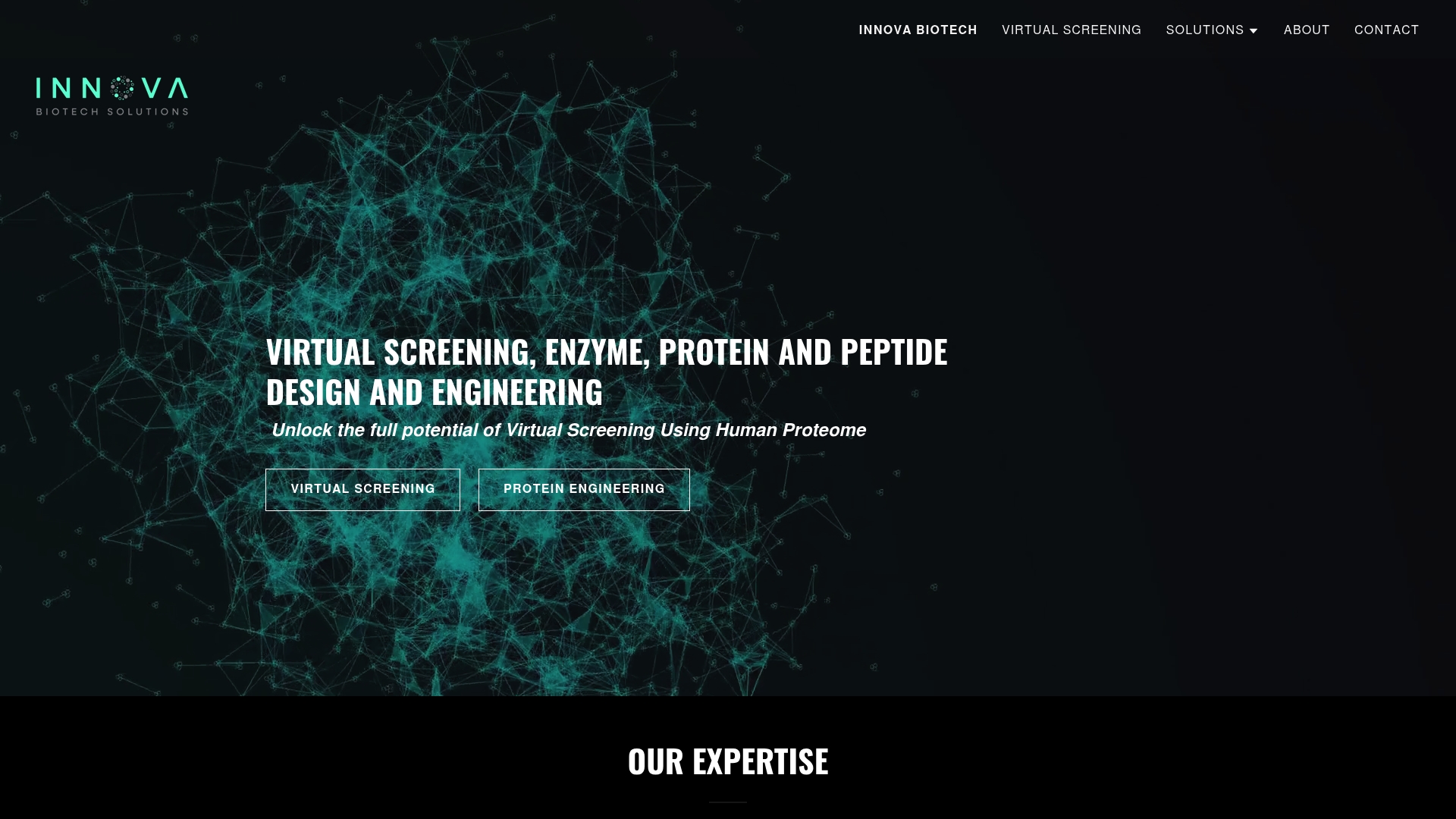
Don’t let uncertainty slow down your research. Learn how Innovabiotech’s focused approach to protein engineering and enzyme optimization can accelerate your drug discovery pipeline. Visit Innovabiotech’s website now and request a personalized consultation to align their services with your project’s specific needs.
FAQ
What unique features does Innovabiotech offer for virtual screening?
Innovabiotech specializes in tailored bioinformatics services, including virtual screening that emphasizes off-target interaction prediction to reduce downstream risk. Their approach allows for high customization for specific research goals, making it ideal for projects requiring unique assay or expression system designs.
How does Innovabiotech compare to Aurlide in terms of lead optimization services?
Aurlide is known for its strong hit discovery focus, boasting a high hit rate that aids in uncovering novel scaffolds for challenging targets. Innovabiotech, in contrast, excels in providing a comprehensive suite of services from virtual screening to enzyme engineering, making it a better fit for teams prioritizing extensive support across all stages of drug discovery.
What is the level of data protection offered by Innovabiotech compared to Plebiotic?
Innovabiotech implements end-to-end encryption and strict access controls to ensure the security of client data during projects. This level of security is critical for preserving intellectual property in sensitive engagements, giving it an edge over competitors like Plebiotic, which may not emphasize the same security protocols in its services.
Can Innovabiotech accommodate small startup teams needing virtual screening and design?
Innovabiotech may not be the best fit for early-stage teams without sufficient budgets, as their pricing is likely quoted per project potentially making small exploratory efforts more expensive. However, for teams with a clear scope and requirements, their custom services can provide significant value.
What types of projects are best suited for Innovabiotech's services?
Innovabiotech is particularly well-suited for research groups and biotech companies that require bespoke protein or peptide design with a focus on confidentiality. Projects that involve clear experimental endpoints and the need for specialized computational support benefit the most from what Innovabiotech offers.