
Multi-omics data analysis services integrate and interpret multiple biological data layers, including genomics, proteomics, metabolomics, lipidomics, transcriptomics, and cytokine profiling, to extract biomarkers, drug targets, and clinical insights from datasets too complex for single-platform analysis. The core value is not just data processing. It is turning raw molecular signals into findings that hold up biologically and translate to real research decisions.
A complete service typically covers:
- Consultation on experimental design and integration strategy
- Data preprocessing, quality control, and normalization
- Statistical modeling and pathway enrichment analysis
- Multi-omics integration using AI and machine learning methods
- Reporting, visualization, and collaborative interpretation
Aligning every analytical step to a specific biological question separates meaningful results from a pile of statistically significant noise.
Why consultation and experimental design come first
Pre-analysis consultation is the most critical step for ensuring data compatibility and powerful integrative analysis. A study designed without accounting for batch effects, sample size, or the right longitudinal versus cross-sectional structure will produce results that cannot be trusted, no matter how sophisticated the downstream analysis gets.
Good consultation addresses:
- Experimental design tailored to integrative omics studies
- Batch effect planning across platforms and sample collection sites
- Sample size calculations for adequate statistical power
- Coordination with core facilities and publicly available datasets
- Compatibility checks across omics platforms before data collection begins
Longitudinal study designs add complexity that requires more sophisticated statistical modeling compared to cross-sectional studies, which directly shapes the service strategy and cost. Getting this right at the start saves months of rework later.
What omics modalities does a full service analyze?

Commonly integrated layers in multi-omics include genomics, proteomics, metabolomics, lipidomics, transcriptomics, and cytokine profiling. Each modality has its own preprocessing requirements, quality thresholds, and analytical pipelines. A service that treats them identically will miss the biology.
Typical modality-specific services include:
- Proteomics: MS-based and RPPA proteomics with protein network mapping and differential abundance analysis
- Metabolomics and lipidomics: MS-based profiling with pathway enrichment and metabolite set analysis
- Transcriptomics: RNA-Seq, smallRNA-Seq, and single-cell transcriptomics for gene expression and splicing
- Genomics: Whole genome sequencing and whole exome sequencing for variant detection and copy number analysis
- Cytokine profiling: Multiplex immunoassay data integrated with transcriptomic and proteomic layers
- Cistromics: ChIP-Seq and bisulfite sequencing for epigenomic context
Customized pipelines adapt to the client's specific data types and research questions rather than forcing every project through a one-size template. Outputs per modality typically include pathway enrichment maps, ranked feature lists, and network visualizations ready for biological interpretation.
Pro Tip: When selecting a bioinformatics analysis service, ask whether their pipelines are modality-specific or generic. A pipeline built for RNA-Seq applied to metabolomics data will systematically miss the most biologically relevant signals.
How integration and statistical methods turn data into insight
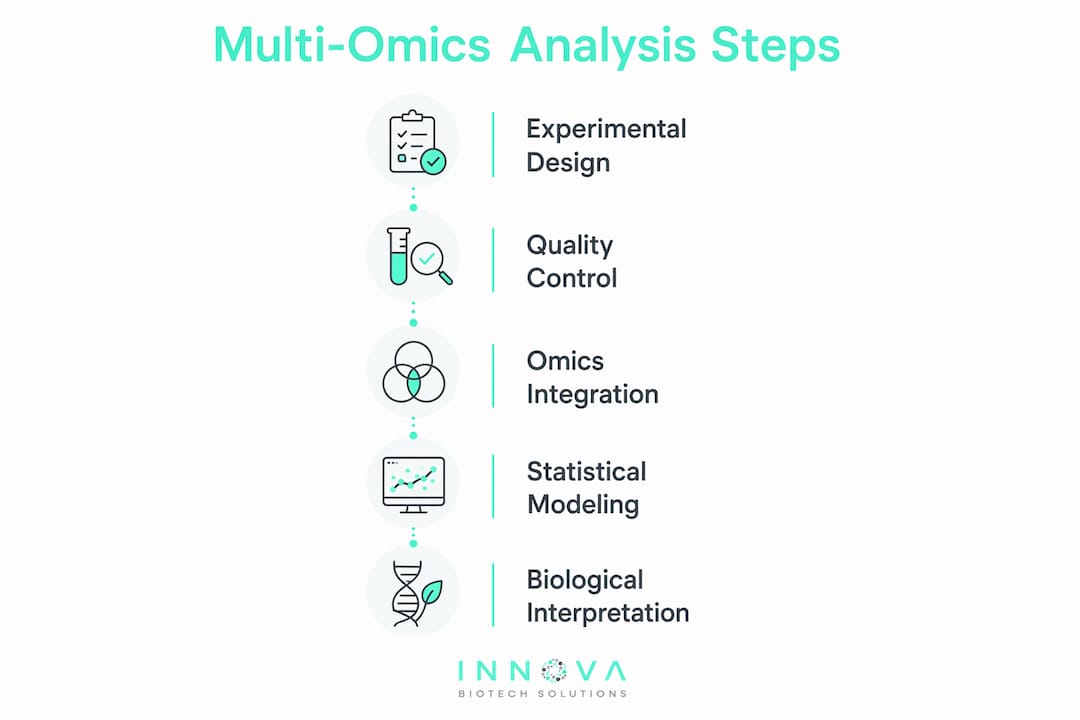
Data harmonization through normalization and batch effect correction is critical to avoid technical noise and promote reproducibility. Without it, what looks like a biological signal is often a platform artifact. Manual inspection and iterative cleaning are not optional steps.
Core analytical methods in multi-omics integration include:
- Normalization and batch correction across platforms
- Pathway and network enrichment analysis per omics layer
- Multi-omics factor analysis and latent factor modeling
- Machine learning models for classification and biomarker selection
- Longitudinal trajectory modeling for time-series datasets
Mapping molecular features onto known biochemical pathways early in the workflow avoids false positives and supports meaningful biomarker and drug target identification. AI-based integration platforms improve discovery speed by automating harmonization and predictive modeling, which accelerates translational outcomes without sacrificing interpretability.
Pro Tip: Prioritize biologically interpretable models validated against clinical databases over black-box machine learning outputs. A finding that cannot be mechanistically explained rarely survives peer review or regulatory scrutiny.

What deliverables should you expect?
Deliverables from multi-omics analysis services typically include detailed summary reports, interactive analysis notebooks with embedded visualizations, and presentation-ready figures for primary investigators. The format matters as much as the content when results need to move from a bioinformatics team to a clinical or regulatory audience.
Standard deliverables include:
- Summary reports with statistical results and biological interpretation
- Heatmaps, volcano plots, and pathway network diagrams
- Biomarker ranking tables with confidence metrics
- Analysis notebooks reproducible in R or Python environments
- Data deposited in public repositories such as GEO or Metabolomics Workbench
Collaborative review sessions with primary investigators are standard practice in well-run services. Results get contextualized against population-scale databases and current literature, not handed over as raw output. Deliverable complexity scales with project scope, so a single-modality pilot looks different from a full multi-omics research solution spanning five data types.
Why Innovabiotech's expertise sets a different standard
Innovabiotech, based in San Francisco, California, brings an interdisciplinary team of data scientists, computational biologists, and domain experts to every multi-omics project. The team works closely with clients from the first consultation through final reporting, maintaining scientific integrity and transparency at each stage.
Key capabilities include:
- Tailored bioinformatics analysis services covering proteomics, metabolomics, transcriptomics, and genomics
- Explainable AI and cloud-based analytics for scalable, interpretable results
- Strong client communication with technical updates at every project milestone
- Customized analysis plans built around each project's specific biological questions
- Integration of publicly available datasets to supplement client-generated data
Innovabiotech's approach emphasizes strong client communication and transparency throughout the entire process. For researchers navigating complex datasets across multiple platforms, that kind of responsive, expert-guided collaboration is what separates a useful analysis from one that collects dust in a supplementary file.
Innovabiotech's multi-omics services for your next project
Researchers who need to move from raw omics data to publication-ready findings, drug target nominations, or clinical biomarker panels face a real bottleneck: the gap between data generation and biological interpretation. Innovabiotech closes that gap directly.
Innovabiotech offers fully customized multi-omics analysis, from experimental design consultation through final deliverables, with explainable AI tools and a team that stays engaged throughout the project. Whether your work involves peptide design and validation informed by proteomic data or protein engineering guided by multi-omics findings, Innovabiotech builds the analysis around your specific biological question, not a generic template. Contact Innovabiotech to discuss your project and get a customized analysis plan.
FAQ
What is multi-omics data analysis?
Multi-omics data analysis integrates and interprets data from multiple biological layers, such as genomics, proteomics, and metabolomics, to identify biomarkers, drug targets, and clinical insights from complex datasets.
Why is experimental design consultation critical before analysis?
Poor experimental design leads to batch effects and incompatible data that no downstream analysis can fully correct. Consultation before data collection ensures the study is powered and structured for meaningful integration.
Which omics modalities are typically included in these services?
Full services cover genomics, transcriptomics, proteomics, metabolomics, lipidomics, and cytokine profiling, each analyzed with modality-specific pipelines and quality control steps.
How does AI improve multi-omics integration?
AI-based platforms automate normalization, detect cross-batch drift, and build predictive biomarker panels, accelerating translational research without sacrificing biological interpretability.
Can Innovabiotech handle multi-omics projects from design to reporting?
Yes. Innovabiotech provides end-to-end support, from experimental design consultation through data integration, statistical analysis, and final deliverables, with explainable AI tools and direct client collaboration at every stage.
Key Takeaways
Multi-omics data analysis services require rigorous experimental design, modality-specific pipelines, and biologically validated integration methods to produce findings that translate to real research decisions.
| Point | Details |
|---|---|
| Design before data | Pre-analysis consultation on experimental design is the most critical step for reliable multi-omics integration. |
| Modality-specific pipelines | Genomics, proteomics, metabolomics, lipidomics, transcriptomics, and cytokine profiling each require dedicated analytical workflows. |
| Batch correction is non-negotiable | Normalization and batch effect correction across platforms prevents technical artifacts from masking true biological signals. |
| Interpretable AI over black-box models | Findings validated against clinical databases and biochemical pathways survive peer review; opaque outputs rarely do. |
| Innovabiotech | Provides end-to-end multi-omics analysis with explainable AI, cloud-based tools, and direct client collaboration from consultation to final reporting. |