
Finding a custom bioinformatics service that delivers precise, publication-ready analysis while safeguarding proprietary project data is unnecessarily difficult. Most providers lack transparent pricing, require extended onboarding for tailored solutions, or limit scope to one-off projects without full cycle collaboration. This comparison shows how six bioinformatics agencies handle data security, collaboration, and delivery formats so research and development teams can select a provider that fits their project scope and workflow.
Table of Contents
- Innova Biotech Solutions
- Ardigen
- BioCogniz
- The Bioinformatics CRO
- INSiGENe
- Allozymes
- Comparison of alternatives
Innova Biotech Solutions
At a Glance
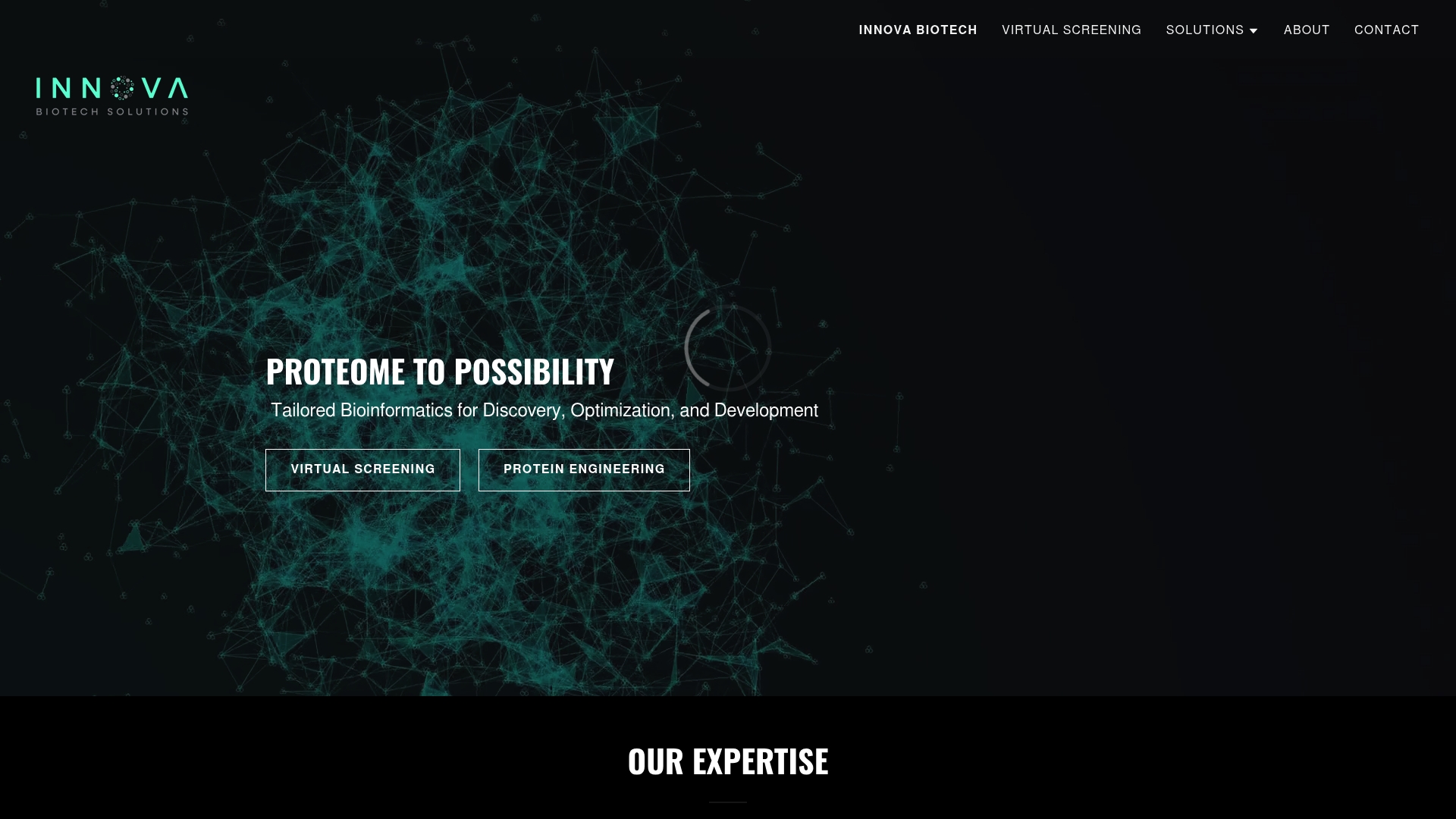
Proprietary peptide fragment database underpins linker selection and chimeric protein construction. Founded in 2024 and based in San Francisco, California, the team couples that database with computational modeling. This combination targets bespoke protein, peptide, and enzyme design projects.
Core Features
Founded in 2024, Innova Biotech Solutions delivers tailored bioinformatics services for discovery, optimization, and development of protein and peptide candidates. The agency runs advanced computational modeling, including virtual screening and structure prediction, and it offers chimeric protein design with domain selection and linker optimization. The vendor states compliance with GDPR and HIPAA and says it protects client data with strong encryption and strict access controls.
Key Differentiator
The proprietary peptide fragment database combined with advanced computational modeling enables more targeted linker design and fragment reuse for chimeric proteins. That pairing lets the team propose linker sequences from an internal library rather than relying only on de novo prediction.
Pros
Expertise in structural bioinformatics and computational protein engineering gives projects strong technical foundations. Customized solutions adapt workflows to specific discovery or development goals, which benefits protein engineers and R D teams. The company emphasizes data confidentiality and a full service scope from virtual screening to peptide and enzyme design.
Cons
- Limited public detail on the specific software tools and algorithms used, which can make technical evaluation before engagement harder.
Who It's For
Biotech and pharmaceutical R D teams, protein engineers, and research institutions that need custom protein, peptide, or enzyme design work will find this agency relevant. Teams with a defined project scope and internal technical direction will get the most value from the tailored engagements.
Unique Value Proposition
Strong encryption and strict access controls support confidential collaboration on sensitive sequences and candidate lists. That operational security reduces the administrative burden when sharing proprietary data with external experts. For projects that must protect IP while iterating on design, this approach shortens decision cycles between lab and computational teams.
Real World Use Case
A biotech company used Innova Biotech Solutions for virtual screening and protein engineering to produce a novel enzyme with higher stability and activity for biofuel production. The engagement paired structure prediction with iterative design and laboratory feedback to reach a production-ready candidate.
Pricing
Pricing is not specified and appears to be set per project and consultation. Expect scope based quotes that reflect modeling complexity, database access needs, and downstream support for experimental validation.
Website: https://innovabiotech.com
Ardigen
At a Glance
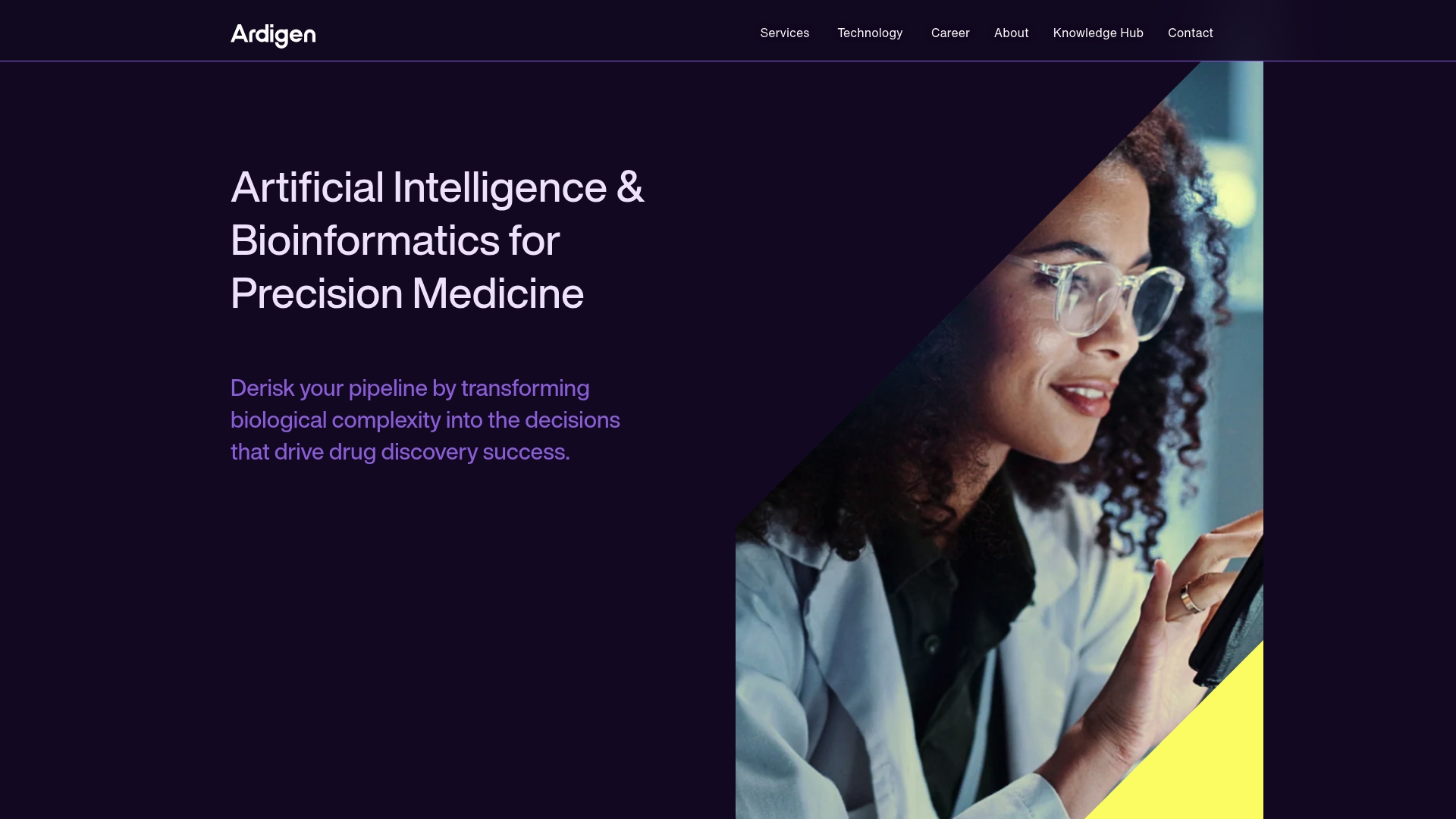
Ardigen reports more than 520 projects and over 100+ clients. The company applies AI and bioinformatics across target discovery, biologics and small molecule design, and clinical trial workflows. Work routinely includes large dataset integration and automation of research pipelines.
Core Features
Ardigen delivers end to end AI workflows that combine custom predictive models with bioinformatics services such as omics analysis and single cell data interpretation. They manage a data universe to ingest and harmonize diverse sources, and they automate pipelines for bioinformatics and clinical data processing. Dedicated software engineering supports deployment and scaling inside existing research infrastructure.
Key Differentiator
Ardigen focuses on fully customized, scalable solutions that span the entire drug discovery pipeline. The team pairs biology expertise with data science and software engineering to carry projects from model development into production. That single-vendor execution model reduces handoffs for programs requiring integrated modeling, data integration, and workflow automation.
Pros
Ardigen reports a lengthy project history that reflects repeated engagements with large pharma and biotech partners. Their multidisciplinary team combines wet lab knowledge, bioinformatics, machine learning, and software engineering to translate models into working tools. Tailored solutions and ongoing support suit programs that need bespoke predictive models and internal data infrastructure rather than off-the-shelf tools.
Cons
-
Their solutions often require deep collaboration and customization, which can extend onboarding and setup times.
-
Complex implementations can demand significant internal resources and engineering support compared to packaged products.
-
Public pricing is limited, which signals a focus on enterprise contracts rather than transparent, fixed packages.
When It May Not Fit
Small teams that need a fast, prebuilt tool will likely find Ardigen too consultative for their timeline. Projects constrained by very tight budgets may not absorb the integration and customization costs. If you require public, standardized pricing and quick procurement, this engagement model may not match your purchasing process.
Who It's For
Research and development teams at biotech and pharmaceutical companies that require tailored AI and bioinformatics capabilities will benefit most. Teams planning integrated programs from target discovery through clinical biomarker workflows will see the greatest value. Groups that can dedicate internal scientists to a collaborative engagement will move faster.
Real World Use Case
A large pharmaceutical partner contracted Ardigen to build an end to end AI platform for target validation and biologics design. Ardigen combined predictive models, omics analysis, and trial workflow automation to shorten development timelines and reduce risk in clinical phases. The engagement reduced handoffs and lowered technical debt across multiple discovery stages.
Pricing
Pricing is not publicly listed. Ardigen focuses on enterprise and custom engagements rather than fixed tiers. Budgets typically reflect project scope, model complexity, and integration work, so contact sales for a scoped proposal and timeline estimate.
Website: https://ardigen.com
BioCogniz
At a Glance
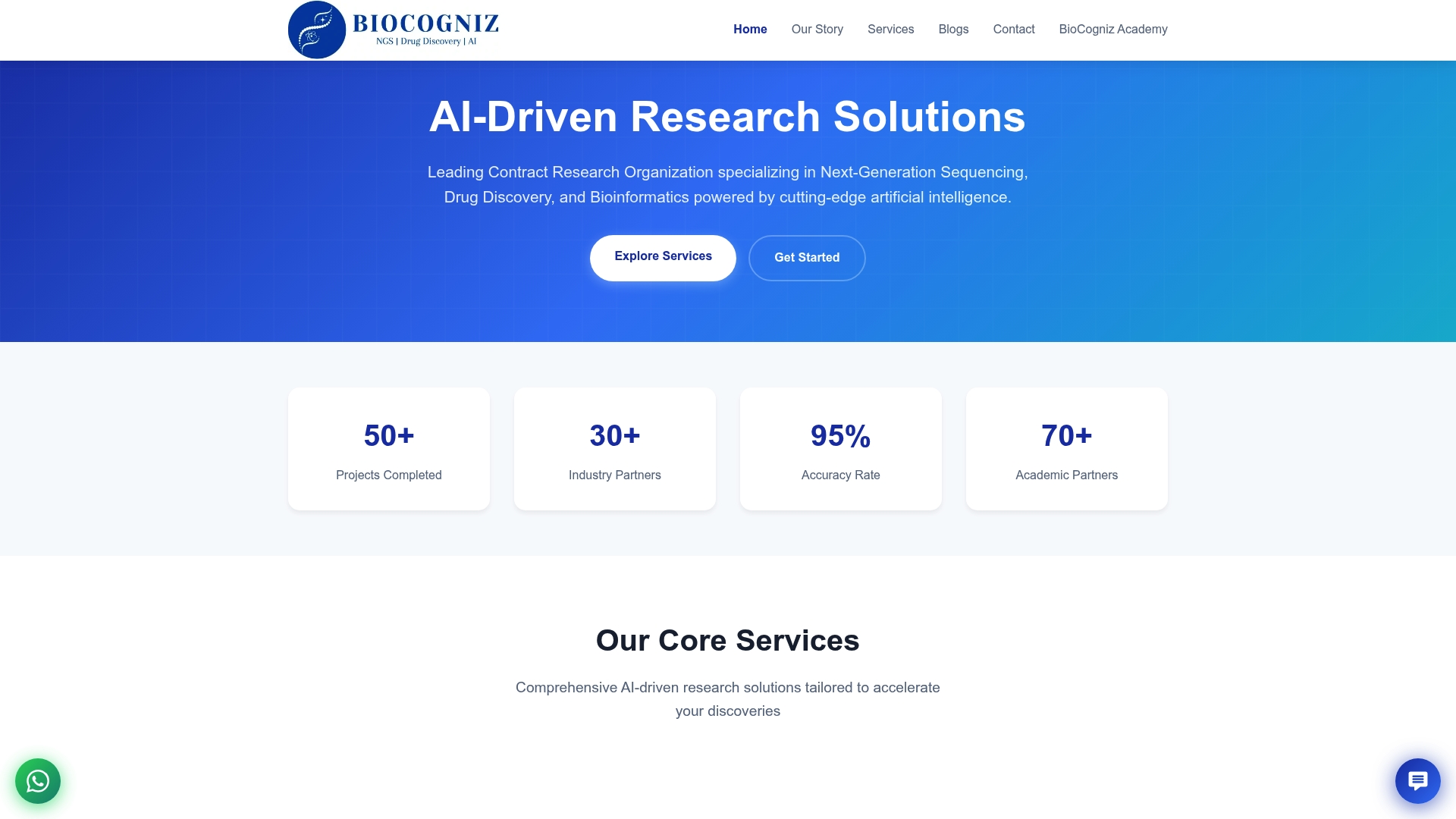
BioCogniz reports 95% accuracy in its data analysis workflows. That figure comes from the vendor and is self reported. The platform pairs next generation sequencing with AI powered drug discovery and custom model development. Teams use it when they need sequencing, analysis, and molecular design in a single engagement.
Core Features
The platform runs AI powered drug discovery workflows for target identification and lead optimization while supporting custom AI model development for specific research questions. It offers next generation sequencing for genomics, transcriptomics, and microbial sequencing alongside AI driven analysis for mitochondrial DNA, RNA sequencing, and whole genome or exome studies. Advanced bioinformatics tools handle pathway analysis, structural prediction, and multiomics integration into unified pipelines.
Key Differentiator
BioCogniz combines in house biological expertise with AI powered pipelines to shorten analysis cycles and improve prediction confidence. That integration focuses on moving projects from raw sequence data to testable therapeutic candidates without heavy toolchain handoffs. The platform emphasizes end to end collaboration between scientists and data engineers to keep biological context central during model development.
Pros
The platform delivers end to end sequencing and analysis capabilities, which reduces the number of vendors you must coordinate with. Global research collaborations and academic partnerships extend domain expertise and assay support. The vendor reports a high success rate in analysis accuracy, and that accuracy claim underpins its positioning for projects that need careful validation and model tuning.
Cons
-
Services assume prior genomics or bioinformatics knowledge. Smaller teams may need extra consultation before starting projects.
-
Pricing is not publicly listed. You must request a custom quote for project cost details.
-
Initial project setup may take longer than off the shelf tools. Complex collaborations require more onboarding and experimental planning.
When It May Not Fit
If you need a fixed, transparent per month price, this platform may not match your procurement needs. If your team prefers turnkey desktop software with instant access, the tailored CRO style engagement will feel heavyweight. Small exploratory projects without external funding may find the collaboration and setup costs too high relative to simple tools.
Who It's For
Research institutions, pharmaceutical and biotech companies, healthcare providers, and academic labs with active sequencing programs will get the most value. The platform fits teams that can commit to collaborative project work with bioinformaticians and wet lab partners. It suits groups aiming to move from sequence data to therapeutic leads under guided support.
Real World Use Case
According to the company, a pharmaceutical partner used BioCogniz to identify and optimize novel cancer compounds and reduced discovery timeline and costs. The engagement combined whole genome sequencing, AI driven molecular design, and iterative validation. That outcome illustrates how the platform blends sequencing and computational design under one provider.
Pricing
Pricing is project specific and not publicly listed. Prospective clients request a scoped proposal to receive a cost estimate tied to sequencing depth, model development, and validation requirements.
Website: https://biocogniz.com
The Bioinformatics CRO
At a Glance
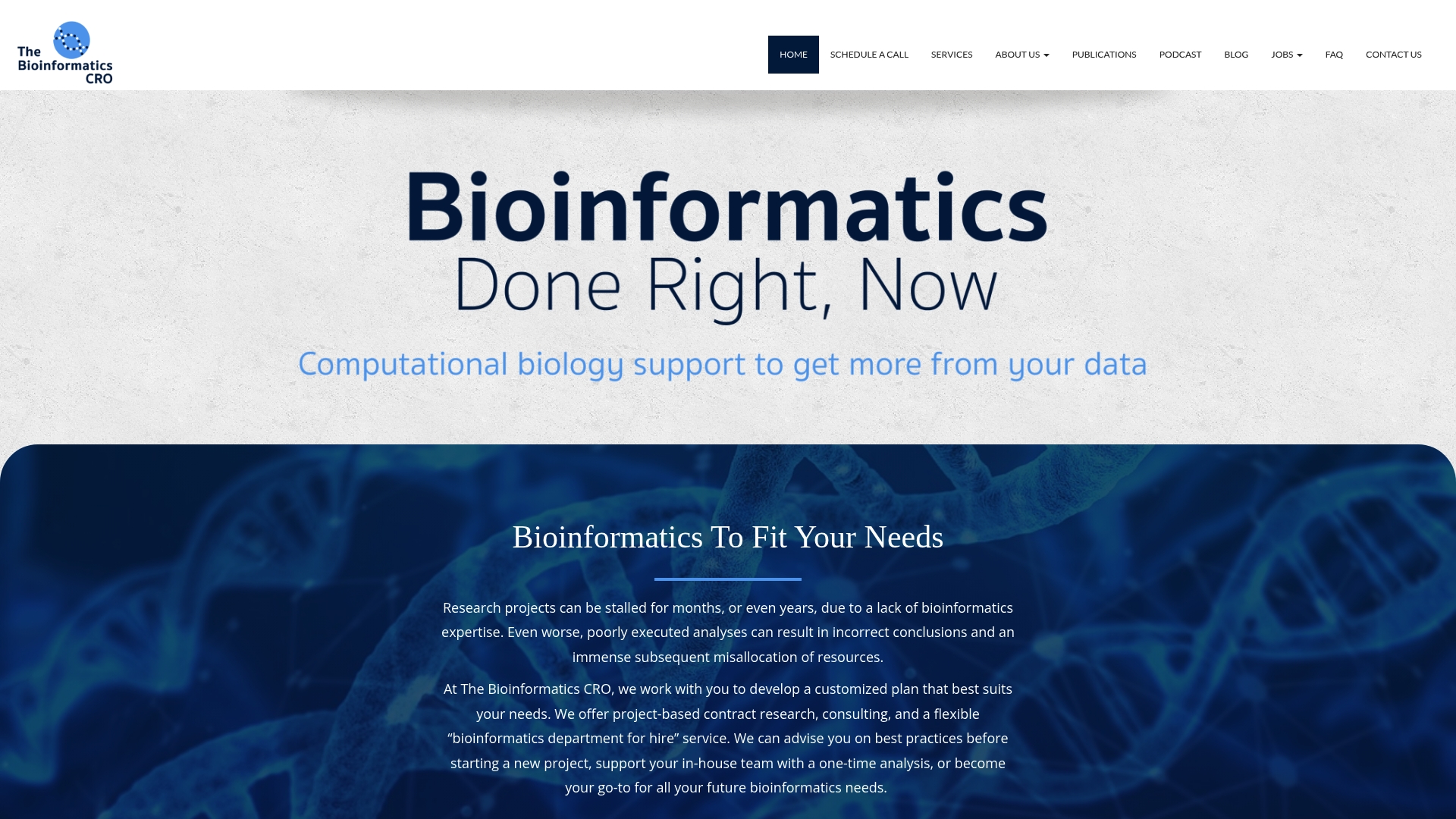
The Bioinformatics CRO's marketing materials claim publication ready analysis delivered in days, not months. That speed pairs with flexible project or department for hire engagement models. Clients retain full ownership of intellectual property and face no authorship requirements.
Core Features
The team runs custom, project based bioinformatics work across genomics, transcriptomics, epigenomics, and genetic analysis. Deliverables arrive as publication ready analyses with code, figures, and methods documentation suitable for manuscript submission. The vendor also offers a department for hire model for sustained support, and they list high profile academic and biotech clients worldwide.
Key Differentiator
What sets this provider apart is the emphasis on quick delivery and senior scientific staff. That claim pairs rapid delivery with PhD level bioinformaticians who prepare manuscript quality outputs. This model shortens the path to submission for teams that lack senior in house analysts.
Pros
Fast turnaround and publication ready deliverables reduce time to manuscript submission for teams without in house bioinformatics. Flexible engagement options let you buy one project or embed a department for hire for longer support and repeated studies. Supports a broad range of analyses across genomics, transcriptomics, epigenomics, and genetic work, which keeps project scope inside one vendor. Clients retain full ownership of intellectual property and face no publication authorship requirements, and the vendor reports work with prestigious academic and biotech clients.
Cons
-
Limited public detail on specific analysis tools or pipelines.
-
No transparent pricing information is publicly available, so budgeting requires direct quotes.
-
Bespoke project model implies potentially high costs for small scale or casual inquiries.
When It May Not Fit
Do not choose this provider if you need fixed price work for a one off, small scale task. Limited public pipeline details will frustrate teams that require documented, auditable workflows before contracting. The bespoke project model also makes early budget planning hard if procurement needs transparent rate cards. If you need an exact toolchain or reproducibility validation in advance, this provider may not meet tender requirements.
Who It's For
Research institutions, biotech companies, and in house research teams will find the service useful for complex data analysis. Groups that lack an internal bioinformatics core but need rapid, publication ready outputs will gain the most. The model also suits teams that prefer contracting PhD level staff rather than hiring permanent personnel.
Real World Use Case
A university researcher contracts The Bioinformatics CRO to analyze large scale genome sequencing data for a multi cohort study. The vendor delivers manuscript ready analysis, figures, and methods documentation, which speeds submission without building an in house team. This arrangement lets the lab move from raw data to a submission package while avoiding the costs of recruiting a permanent bioinformatics group.
Pricing
No public pricing is listed. Projects are quoted on a bespoke basis and require direct contact for estimates. The lack of transparent rates makes early budget planning difficult for procurement teams and may require formal budget approval before engaging.
Website: https://bioinformaticscro.com
INSiGENe
At a Glance
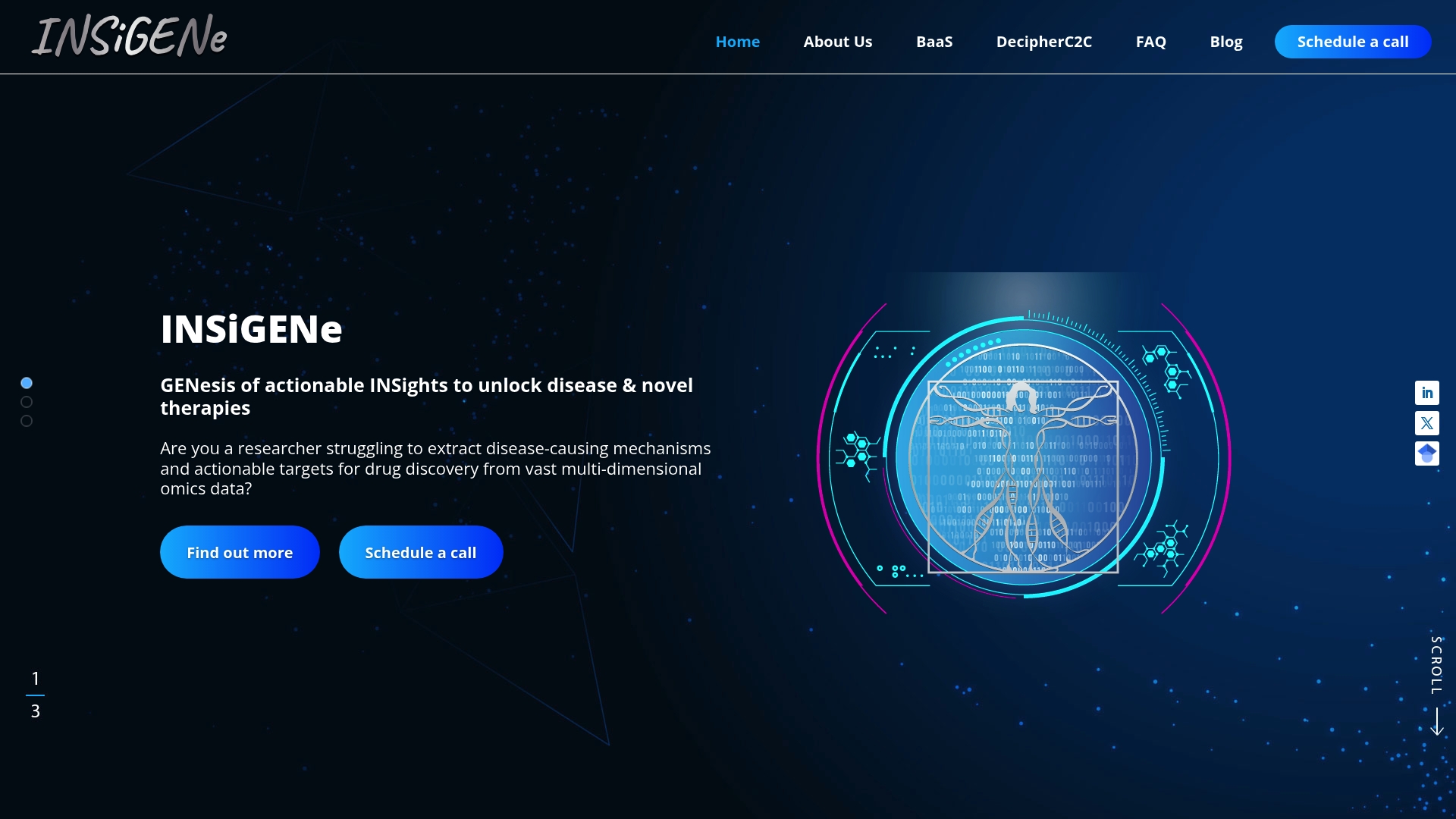
DecipherC2C identifies therapeutic targets from single-cell data for disease-relevant cell populations. The platform appears central to INSiGENe workflows for target discovery. Project work includes publication-ready visualizations and support for experimental design.
Core Features
INSiGENe delivers Bioinformatics as a Service for genomics, transcriptomics, proteomics, epigenomics, and metagenomics analysis. Teams get hands-on interpretation and custom reports that are formatted for publication. The service also covers data quality control workflows and experimental design support.
Key Differentiator
INSiGENe centers its offering on expert-led interpretation that turns multi-omics complexity into disease insights. The emphasis on single-cell target discovery via DecipherC2C separates it from generalist analysis shops. This approach suits groups that prefer a project-based service rather than self-service software.
Pros
INSiGENe produces publication-ready reports and visualizations that shorten manuscript preparation time. The vendor lists an experienced multidisciplinary team capable of handling complex, multi-dimensional datasets. INSiGENe reports project initiation within one week, which speeds early-stage projects and reduces administrative lag.
Cons
- Pricing requires direct contact and is not publicly listed, which delays budget planning.
- No clear offering for client-facing software or a fully automated pipeline; work is delivered as a service.
- Public information on large data volume handling and scalability is limited, so enterprise scale needs may be unclear.
When It May Not Fit
If you need an on-premise or self-serve analysis platform, this service model will not match your workflow. Teams that require transparent, fixed pricing for budgeting will find pricing details missing. Projects demanding guaranteed high-throughput processing at scale should verify capacity before engagement.
Who It's For
Researchers and clinicians who need expert multi-omics interpretation for disease mechanism work will benefit most. The typical user runs complex experiments and wants a partner to convert raw omics into validated targets and publishable figures. Smaller labs without in-house bioinformatics will also find the hands-on service valuable.
Real World Use Case
A pharmaceutical research team provided patient genomics and transcriptomics to INSiGENe for target discovery in oncology. INSiGENe ran single-cell analyses through DecipherC2C, produced candidate target lists, and delivered figures suitable for a grant application. The collaboration included experimental design feedback and QC checks.
Pricing
Pricing is listed as not specified and requires contacting INSiGENe for a custom quote. Expect project-based billing rather than fixed tier pricing. Ask for a written scope and timeline when requesting a quote to avoid scope creep.
Website: https://insigene.com
Allozymes
At a Glance
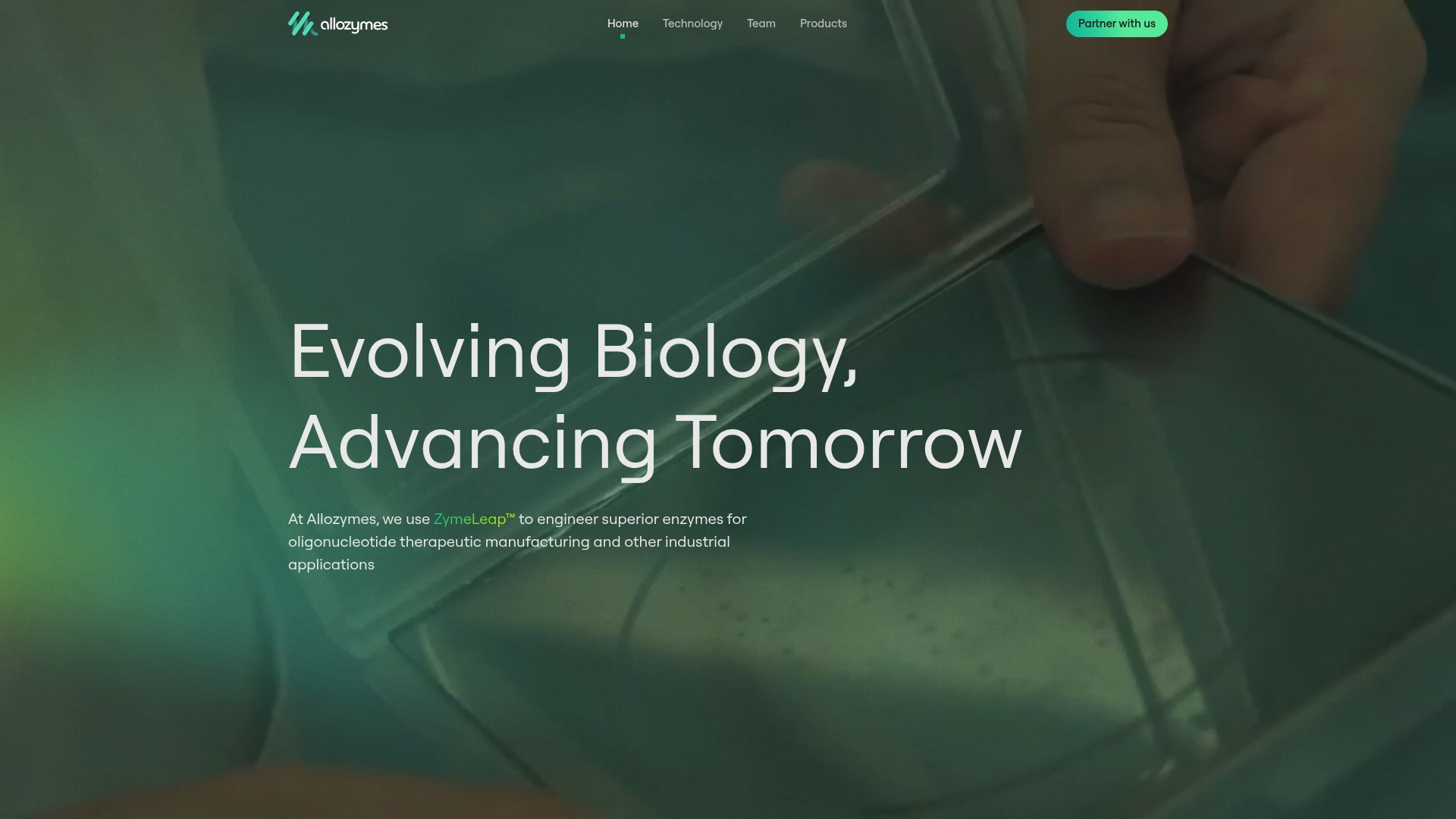
Allozymes reports screening over 10 million variants per day on its ZymeLeap™ platform. That claim pairs microfluidics and computational design to accelerate enzyme discovery for oligonucleotide manufacturing. The company also offers lab to pilot scale support up to 150 L for process development.
Core Features
The ZymeLeap™ platform combines microfluidics, bioinformatics, and machine learning to run high throughput variant screening and guide computational enzyme design. The platform supports an enzyme portfolio that includes RNA ligases, DNA ligases, and industrial biocatalysts. Integrated process development covers upstream discovery through downstream processing and enzyme supply at pilot scale.
Key Differentiator
Allozymes pairs very large scale microfluidic screening with AI guided computational design to compress discovery cycles. That throughput claim lets teams evaluate vastly more sequence space than conventional plate based screens. The integration of screening hardware and design workflows reduces iteration between in silico predictions and experimental validation.
Pros
Allozymes combines a high throughput experimental engine with computational design to shorten the loop between hypothesis and tested enzyme variants. The platform emphasizes process readiness and pilot scale capacity, which helps translate hits into manufacturable enzymes. The vendor reports collaborative customer workflows, and the enzyme portfolio covers key needs for oligonucleotide and industrial biocatalysis projects.
Cons
-
Limited independent customer reviews make third party performance validation hard to find.
-
The product focus centers on enzyme engineering and biocatalysis, so it may not cover unrelated biotech software needs.
-
Pricing is not publicly disclosed, which suggests bespoke work and potentially higher costs for custom projects.
When It May Not Fit
If your program targets non enzymatic process control or small molecule formulation, this platform will likely miss core requirements. Organizations with strict fixed budgets and short timelines may find custom enzyme engineering too costly or too slow. Teams needing off the shelf software modules for broad lab informatics will want a different vendor.
Notable Integrations
Allozymes integrates with common computational bioinformatics tools to feed sequence design and analysis. The platform also connects to microfluidic screening hardware to run its high throughput assays.
Who It's For
Biotech companies and pharmaceutical developers working on oligonucleotide therapeutics will find the platform relevant. Industrial manufacturers seeking custom biocatalysts for chemical synthesis can use the pilot scale and downstream options. Project teams that plan for custom development work and longer timelines match the vendor profile.
Real World Use Case
A biotech firm worked with Allozymes to engineer custom enzymes for scalable DNA and RNA synthesis. The collaboration targeted higher purity and smoother scale up from lab experiments to pilot runs. That engagement reportedly reduced manufacturing costs and shortened throughput time for the program.
Pricing
Pricing is not publicly listed and appears to follow a custom engagement model. Prospective customers must contact the company for scope based quotes and project level cost estimates.
Website: https://allozymes.com
Comparison of alternatives
The offering of custom bioinformatics services includes a wide array of specialized providers, each excelling at distinct aspects tailored to enhance biotech and pharmaceutical processes. Determining the best option requires understanding project-specific needs and the unique strengths each service provider offers.
Specialized focus versus scalability
Innova Biotech Solutions stands out for its integrated proprietary peptide fragment database and computational modeling capabilities, enabling targeted linker design and efficient method development for chimeric proteins. On the other hand, Ardigen emphasizes scalable bioinformatics workflows and automation, excelling in projects involving extensive data integration. Research teams should weigh these approaches according to their study objectives to determine the most appropriate partner for their requirements.
High-throughput engineering for oligonucleotide applications
Allozymes specializes in large-scale enzyme screening for oligonucleotide and industrial biocatalysis tasks. Its ZymeLeap™ technology enables the screening of millions of variants daily, offering throughput. For teams targeting process optimization in oligonucleotide therapeutics, Allozymes provides tools that can rapidly iterate through extensive sequence spaces, offering a unique advantage in this niche application compared to other providers.
Best fit
- Innova Biotech Solutions is highly suitable for biotech and pharmaceutical R&D teams seeking customized protein, peptide, and enzyme designs with advanced computational modeling and stringent data security.
- Ardigen excels for organizations needing expert-level scalability and automation in integrating vast multi-source datasets, streamlining the transition from R&D to clinical applications.
- Teams developing novel enzymes for oligonucleotide therapeutics can look to Allozymes, whose proprietary microfluidic screening achieves results with remarkable speed and throughput efficiency.
Our pick
Given its unique offering of a proprietary peptide fragment database and commitment to data confidentiality, Innova Biotech Solutions stands out as the choice for teams undertaking bespoke protein and peptide engineering projects. Their secure and tailored approach makes them the recommended solution for scenarios where intellectual property confidentiality and highly specialized modeling are prioritized.
The table below compares various providers offering custom bioinformatics and computational biology services based on their unique capabilities and targeted applications.
| Provider | Core Service | Key Differentiator | Best For | Pricing | Limitation |
|---|---|---|---|---|---|
| Innovabiotech | Protein and enzyme design | Proprietary peptide fragment database and modeling | Protein engineers and R&D teams | Price not published | Limited public details on software tools |
| Ardigen | AI and bioinformatics for drug discovery | Fully custom, scalable solutions with data integration | Integrated drug discovery programs | Price not published | Requires significant onboarding and resources |
| BioCogniz | AI-driven sequencing and molecular design | 95% analysis accuracy with sequencing and AI combined | Institutions handling complex sequencing data | Price not published | Setup may require extensive experimental planning |
| The Bioinformatics CRO | Genomic and transcriptomic analysis | Quick turnaround and publication-ready deliverables | Labs seeking manuscript-ready analysis | Price not published | Minimal transparency on analysis pipelines |
| INSiGENe | Multi-omics analysis and interpretation | Focus on single-cell target discovery and expert-led interpretation | Researchers in disease mechanism discovery | Price not published | Service-based model limits instantaneous accessibility |
| Allozymes | Enzyme design with microfluidics and AI | High throughput enzyme screening with ZymeLeap™ platform | Oligonucleotide and industrial biocatalysis | Price not published | Limited to enzyme-focused workflows |
Choosing the Right Alternative for Your Bioinformatics Needs
Biotech and pharmaceutical research teams often face challenges finding tailored bioinformatics services that fit complex project goals. Key concerns include ensuring data confidentiality, integrating proprietary databases, and accelerating protein and enzyme design workflows. Innovabiotech offers solutions that address these needs with a proprietary peptide fragment database and expert-driven computational modeling to deliver customized virtual screening, protein engineering, and peptide design.
Innovabiotech supports your project at every stage with clear communication and scientific precision. Clients benefit from a dedicated team that works closely alongside internal R D specialists, enabling faster decision-making and secure collaboration. Visit Innovabiotech to learn how tailored biotech services can overcome common hurdles faced by research institutions and biotech companies.
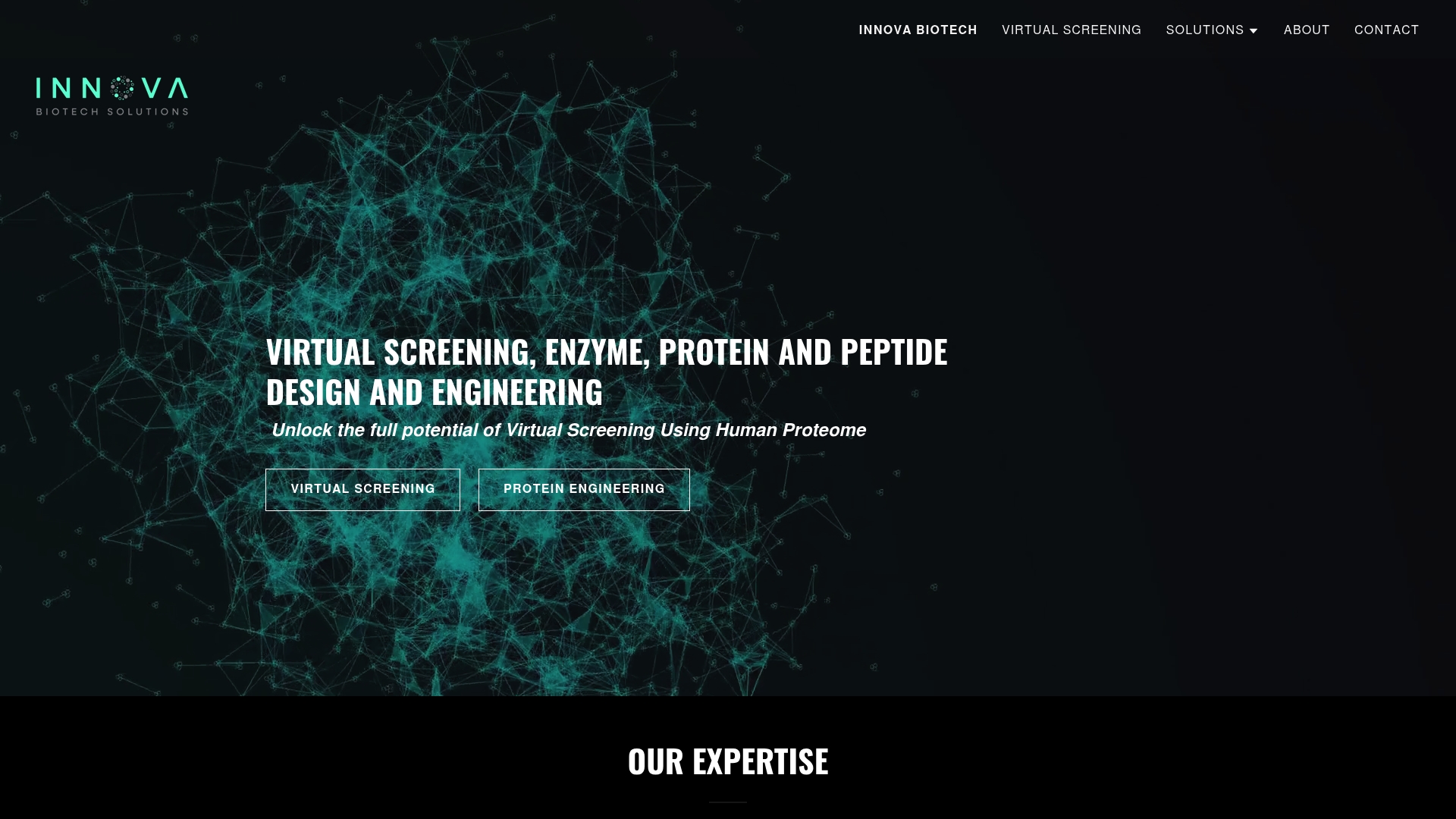
See how Innovabiotech’s project-based approach enhances bioinformatics workflows. Schedule a consultation to receive a custom plan and advance your discovery process with confidence.
FAQ
How does Innovabiotech support custom protein and enzyme design projects?
Innovabiotech provides tailored bioinformatics services that enhance the discovery and optimization of protein and peptide candidates. Their proprietary peptide fragment database and advanced computational modeling techniques make them particularly effective for bespoke projects in this domain.
What is the difference between Innovabiotech and Ardigen regarding workflow customization?
Ardigen offers fully customized, scalable solutions that span the entire drug discovery pipeline, focusing on integrated programs. In contrast, Innovabiotech excels with its targeted linker design and chimeric protein design, making it more suited for specific protein engineering needs rather than broad projects.
Which platform provides better security for sensitive data?
Innovabiotech emphasizes data confidentiality with strong encryption and strict access controls, making it a solid choice for those needing to collaborate on sensitive sequences. This level of security is vital for projects where protecting intellectual property is a primary concern.
How does Innovabiotech handle project scope and pricing?
Pricing at Innovabiotech is project-specific and not publicly listed, typically reflecting modeling complexity and support requirements. Prospective clients should expect to receive quotes based on the defined project scope during initial discussions.
Which platform integrates better with existing research infrastructure?
While both Innovabiotech and Ardigen provide strong capabilities, Ardigen's dedicated software engineering teams support seamless deployment and scaling within existing research setups. Innovabiotech may appeal more to teams that need robust linker design and specialized protein engineering support.