
TL;DR:
- Enzyme optimization enhances enzyme performance for pharmaceutical synthesis, offering higher selectivity and sustainability. It reduces resource use, improves product purity, and simplifies regulatory compliance, especially at scale. Early implementation and advanced technologies like machine learning accelerate development and lower costs.
Enzyme optimization, formally known as biocatalysis engineering, is the targeted enhancement of enzyme function to improve the selectivity, yield, and sustainability of pharmaceutical synthesis. Pharmaceutical researchers rely on it because optimized enzymes perform reactions under mild aqueous conditions that traditional chemical synthesis cannot match. The question of why use enzyme optimization in pharma has a direct answer: it reduces process complexity, lowers environmental burden, and produces cleaner impurity profiles that support GMP compliance. Innovabiotech's enzyme solutions team works with these principles at every stage of drug development, from early lead optimization through commercial manufacturing.
Why use enzyme optimization in pharma over traditional synthesis?
Enzyme optimization gives pharmaceutical manufacturers a measurable process advantage over conventional chemical routes. Biocatalytic steps operate at near-neutral pH, ambient temperature, and in aqueous media, which eliminates the need for cryogenic reactors, anhydrous solvents, and heavy metal catalysts. That shift alone changes the economics and safety profile of a manufacturing campaign.
The benefits of enzyme optimization become most visible in three areas: resource consumption, selectivity, and regulatory fit.
- Resource consumption: Water usage drops by up to 30% compared to traditional chemical synthesis, and energy costs fall in parallel. Fewer harsh reagents means lower waste treatment costs and a smaller environmental footprint.
- Selectivity: Optimized enzymes deliver high chemo-, regio-, and enantioselectivity. That precision minimizes unwanted byproducts and cuts the number of downstream purification steps required before a batch can be released.
- Regulatory fit: Cleaner impurity profiles reduce batch failure risk and simplify the analytical package submitted to agencies like the FDA or EMA. Enzyme-based routes align naturally with ICH Q11 guidance on development and manufacture of drug substances.
The total cost of goods improvement is real but context-dependent. Enzyme development carries upfront costs. Those costs are recovered through fewer unit operations, higher yields, and reduced solvent disposal fees across the full manufacturing campaign.
Pro Tip: When evaluating a biocatalytic route, calculate total cost of goods across the full campaign rather than comparing only reagent costs at the reaction step. The savings in purification and waste disposal often exceed the enzyme development investment.
How are modern technologies accelerating enzyme optimization?
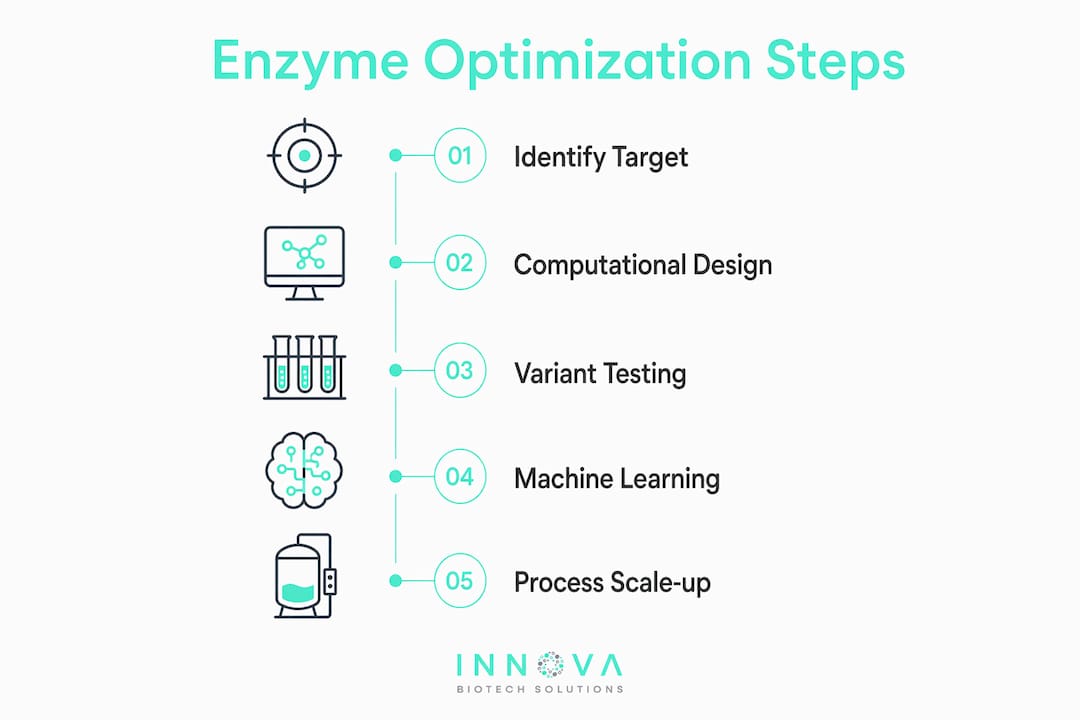
Computational tools and machine learning have changed the speed at which researchers can identify and engineer useful enzyme variants. The old model required screening hundreds or thousands of mutants in the lab. The new model predicts which variants will perform before a single plate is run.
Computational protein redesign
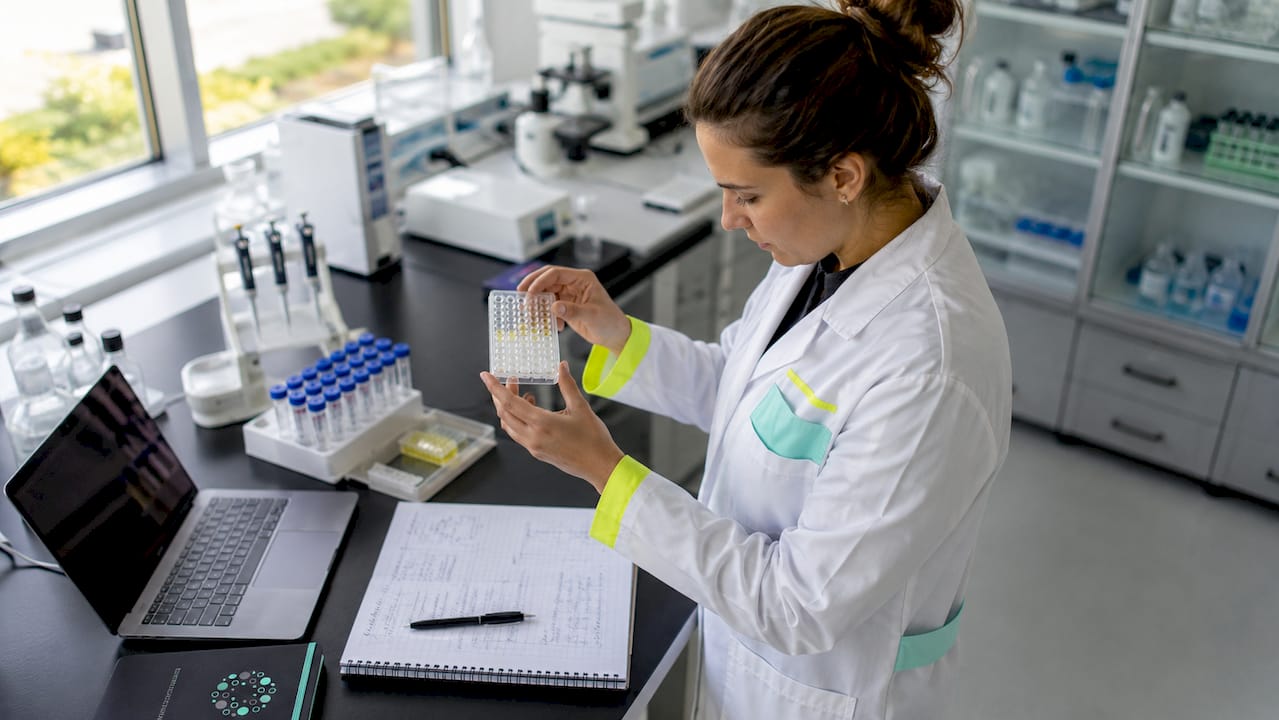
Tools like ProteinMPNN allow researchers to redesign enzyme sequences for improved solubility and catalytic activity without exhaustive wet-lab iteration. Computational redesign of glycosyltransferases has produced fermentation titers reaching 4.05 g/L, a result that would have taken years of classical mutagenesis to achieve. Integrating computational redesign with experimental validation reduces trial-and-error and enables engineering of enzymes that were previously difficult to express in microbial systems.
Machine learning for variant selection
Machine learning models trained on high-throughput experiments predict enzymatic activity and selectivity more accurately than traditional screening. This is especially valuable for enantioselectivity, which is critical when synthesizing chiral pharmaceutical intermediates. ML methods have been applied to rank transaminase variants for the synthesis of chiral building blocks, cutting the number of lab experiments needed by a significant margin.
Immobilization and continuous processing
Enzyme immobilization on silica or polymer supports converts a single-use reagent into a recyclable manufacturing asset. Filtration-based recovery of immobilized enzymes is now standard in continuous bioprocessing setups. Continuous flow reactors paired with immobilized enzymes maintain consistent reaction conditions, which improves batch-to-batch reproducibility and supports process analytical technology (PAT) frameworks.
Pro Tip: Pair computational variant screening with a small focused wet-lab confirmation panel of 20–50 variants rather than full library screening. You get 80% of the performance gain at a fraction of the experimental cost.
What are the practical applications of enzyme optimization in drug development?
Enzyme optimization in pharmaceuticals touches every stage of the development pipeline, from early discovery through commercial supply. The applications are most impactful where chemical synthesis struggles most: chiral centers, macrocyclic structures, and complex conjugates.
| Development stage | Application | Key benefit |
|---|---|---|
| Lead optimization | Biocatalytic synthesis of chiral intermediates | Avoids racemic mixtures, reduces purification burden |
| Clinical supply | Enzymatic route scouting for APIs | Faster route development, lower reagent cost |
| Commercial manufacturing | Enzymatic cascades for complex molecules | Multi-kilogram scale without chromatography |
| Downstream processing | Immobilized enzyme reactors | Consistent impurity profiles, GMP-ready output |
| Bioconjugation | Enzyme-mediated ADC and protein degrader assembly | Site-specific conjugation, high product homogeneity |
The most striking recent example of enzyme optimization advantages at scale is the assembly of a complex macrocyclic peptide drug candidate using 13 optimized enzymes at multi-kilogram scale, with no chromatography required. That result demonstrates that enzymatic cascades can handle the structural complexity of next-generation drug modalities. The pharmaceutical industry is increasingly adopting biocatalytic cascades to address the chemical challenges posed by antibody-drug conjugates, protein degraders, and other macromolecular therapeutics.
Early integration of biocatalysis in the development pipeline prevents costly late-stage process redesign and accelerates clinical trial supply timelines. A biocatalytic route identified at the lead optimization stage can be scaled directly into clinical manufacturing, avoiding the expensive switch from a chemical route discovered too late to change. Access to a broad enzyme toolbox and rapid enzyme identification is what makes this early integration practical rather than aspirational.
The directed evolution techniques used to generate enzyme variants for these applications have matured significantly. Iterative rounds of mutation and selection now routinely produce enzymes with activity and stability profiles that wild-type enzymes cannot match.
What challenges exist when implementing enzyme optimization in pharma?
Enzyme optimization carries real implementation barriers. Understanding them upfront prevents the most common failure modes.
Historical cost concerns were legitimate. Wild-type enzymes sourced from natural organisms often lacked the stability or activity needed for manufacturing conditions. Engineering those enzymes required significant investment in protein science expertise. That barrier has dropped substantially as computational tools reduce the number of experimental cycles needed.
Process sensitivity remains a consideration. Enzymes can be inhibited by substrates, products, or co-solvents present in pharmaceutical reaction mixtures. Reaction engineering, including pH control, substrate feeding strategies, and co-solvent tolerance screening, addresses most of these issues before scale-up.
The following barriers and their current solutions define the practical implementation picture:
- Enzyme stability at scale: Immobilization on inorganic or polymeric supports resolves thermal and operational stability issues and enables cost recovery through recycling.
- Lack of in-house expertise: Platform-based CDMOs offer end-to-end services from feasibility assessment through host system engineering, removing the need for full internal capability.
- Late-stage integration: Starting enzyme route scouting after a chemical route is locked in creates timeline pressure. Early-stage feasibility studies, even brief ones, prevent this problem.
- Interdisciplinary gaps: Successful enzyme optimization requires process chemists, protein engineers, and analytical scientists working from a shared project brief. Siloed teams produce suboptimal results.
Pro Tip: Run a two-week enzyme feasibility screen in parallel with early chemical route scouting. The cost is low relative to the value of having a biocatalytic option ready if the chemical route hits selectivity or waste problems at scale.
Key takeaways
Enzyme optimization is the single most effective tool pharmaceutical researchers have for building selectivity, sustainability, and GMP compliance into a synthesis route from the start.
| Point | Details |
|---|---|
| Start early in the pipeline | Integrating biocatalysis at lead optimization prevents expensive late-stage process redesign. |
| Selectivity drives downstream savings | High enantioselectivity from optimized enzymes reduces purification steps and batch failure risk. |
| Machine learning cuts iteration time | ML-based variant prediction reduces wet-lab screening cycles for chiral intermediates. |
| Immobilization recovers enzyme cost | Silica or polymer-supported enzymes are recyclable, converting a consumable into a manufacturing asset. |
| Scale is proven | A 13-enzyme cascade assembled a macrocyclic peptide drug candidate at multi-kilogram scale without chromatography. |
The case for treating enzyme optimization as a first-line strategy
Most pharmaceutical teams still treat biocatalysis as a fallback when chemical synthesis fails. That framing is backward, and I've seen it cost programs months of rework.
The teams that get the most out of enzyme optimization are the ones that run biocatalytic feasibility in parallel with chemical route scouting from day one. They don't wait for a selectivity problem to appear at kilogram scale. They build the enzyme option early, even if they never use it, because having it ready changes the risk profile of the entire program.
The integration of machine learning into enzyme engineering has removed the main objection I used to hear: that enzyme development takes too long. Predicting which variants will perform before running a plate has compressed what used to be a six-month screening campaign into weeks. That changes the math on when it makes sense to invest in a biocatalytic route.
The other shift I'd highlight is in how teams are structured. The programs that succeed treat protein engineers and process chemists as co-equal contributors from the start. When protein engineers are brought in after a chemical route is already locked, they're solving the wrong problem. The enzyme engineering advances happening right now in computational design and continuous processing are only useful if the organizational structure lets them connect to the development timeline early enough to matter.
My honest view: enzyme optimization is not a niche technique for complex natural product synthesis. It is a first-line strategy for any API with a chiral center, a macrocyclic structure, or a bioconjugation requirement. The field has the tools. The question is whether your team's process gives those tools the chance to work.
— Hooman
How Innovabiotech supports enzyme optimization in pharmaceutical research
Innovabiotech, based in San Francisco, California, provides pharmaceutical and biotech researchers with tailored enzyme and protein engineering services built around the specific demands of each project.
The team at Innovabiotech combines computational biology, bioinformatics, and experimental validation to design enzymes with the activity, selectivity, and stability profiles your synthesis route requires. Services span enzyme design and optimization, protein engineering and computational modeling, and peptide design services for complex drug candidates. Every project runs from initial consultation through delivery with full technical transparency. If your program involves a chiral API, a macromolecular therapeutic, or a process that needs a cleaner impurity profile, Innovabiotech's team is equipped to build the biocatalytic solution around your timeline.
FAQ
What is enzyme optimization in pharmaceutical manufacturing?
Enzyme optimization, also called biocatalysis engineering, is the process of enhancing an enzyme's catalytic activity, selectivity, or stability to make it suitable for pharmaceutical synthesis. It produces APIs and intermediates with fewer byproducts and under milder conditions than traditional chemical routes.
How does enzyme optimization improve drug synthesis selectivity?
Optimized enzymes achieve high chemo-, regio-, and enantioselectivity, which means they act on the correct molecular site and produce the desired stereoisomer with minimal side products. This cleaner selectivity profile directly reduces downstream purification burden and supports GMP compliance.
Can enzyme optimization work at commercial manufacturing scale?
Yes. A documented example used 13 optimized enzymes to assemble a macrocyclic peptide drug candidate at multi-kilogram scale without any chromatography step, confirming that enzymatic cascades are viable for commercial pharmaceutical production.
What role does machine learning play in enzyme optimization?
Machine learning models trained on high-throughput experimental data predict enzyme variant activity and enantioselectivity before lab testing, reducing the number of screening cycles required. This is particularly valuable for identifying transaminase and glycosyltransferase variants used in chiral pharmaceutical intermediate synthesis.
When should pharmaceutical teams integrate enzyme optimization into development?
Early-stage integration at the lead optimization phase prevents costly process redesign later and accelerates clinical supply timelines. Running a biocatalytic feasibility screen in parallel with chemical route scouting is the most effective approach.