

Every enzyme optimization project falls into one of seven buckets: directed evolution, rational design, semi-rational design, high-throughput screening and selection, assay and reaction optimization (DoE), stabilization and immobilization, and computational or machine-learning-guided design. Professional reviews classify these into three primary umbrella strategies — directed evolution, rational design, and semi-rational design — with HTS platforms, DoE, stabilization, and computational tools functioning as the supporting machinery inside each.
Here's the fast version. If you don't know the mechanism or lack a usable structure, start with directed evolution. If you have a high-confidence structure or an AlphaFold2 model and a specific catalytic hypothesis, go rational. If you're stuck between the two, structure exists but is incomplete, or epistasis is likely, semi-rational hotspot libraries usually win. Stability problems get solved with immobilization, fusion tags, or consensus design, not screening. And if you're running more than a few hundred variants a day by hand, you need a real HTS or selection platform before you need a better algorithm.
Before picking a lane, run these checks:
- Goal clarity: Are you optimizing activity, stability, specificity, expression, or a specific process condition (pH, solvent, temperature)? Mixed goals need staged plans, not one library.
- Assay readout availability: Do you have a fluorogenic, colorimetric, or growth-based readout that scales? No readout means no screening, period.
- Throughput capacity: Plate-based work tops out around 10³ to 10⁵ variants per day; droplet or FACS-based platforms push into the 10⁶ to 10⁷+ range.
- Timeline and budget: Rational design cycles run weeks; full directed evolution campaigns with iterative rounds often run months.
- Genotype–phenotype linkage: If you can't tie a hit back to its sequence, the platform choice is wrong before you even start.
Key Takeaways
Choosing the right enzyme optimization technique depends on structural knowledge, assay readout availability, required throughput, and how activity gains trade off against stability.
| Point | Details |
|---|---|
| Match method to knowledge gap | Unknown mechanism favors directed evolution; a solid structure and hypothesis favors rational design; partial structural data favors semi-rational hotspot libraries. |
| Fix the assay before screening | Validate Z'-factor and dynamic range with DoE before committing to any high-throughput platform. |
| Platform choice depends on readout and volume | Plate screens suit hundreds of variants; droplet, FACS, or selection-based platforms suit millions. |
| Stability needs separate engineering | Immobilization, consensus design, and fusion tags address operational stability independently of activity work. |
| Use small pilots before scaling | Feed early experimental data into ML models and validate pilot libraries before committing to full campaigns. |
| Outsource for specialized platforms | Innovabiotech supports directed evolution, semi-rational design, HTS, and computational optimization for teams lacking in-house ultra-HTS capacity. |
Table of Contents
- Enzyme Optimization Techniques List by Goal and Method Category
- Directed Evolution: Library Design and Screening Practice
- Rational Design: Structure-Guided Tools and Their Limits
- Semi-Rational Design: Hotspot Libraries That Cut Screening Burden
- High-Throughput Screening and Selection: Matching Platform to Readout
- Assay and Reaction Optimization: Getting Reliable Data Before You Screen
- Stabilization and Process Engineering: Keeping Activity Where You Put It
- Computational and Machine Learning Approaches: Narrowing the Search Before You Screen
- Design–Build–Test–Learn: Tracking Progress With the Right Metrics
- Choosing Your Path: A Decision Checklist
- When an External Enzyme Optimization Partner Makes Sense
- How We Approach Enzyme Optimization Projects
- Get Enzyme Optimization Support From Innovabiotech
- Selected Primary Sources and Further Reading
- Sources
- FAQ
Enzyme Optimization Techniques List by Goal and Method Category
Matching a method category to your actual bottleneck saves more time than any single tool choice. The table below aligns the seven core approaches with the goals they solve best, based on how these methods have been applied across published enzyme engineering literature.
| Method category | Best for | Typical outcome reported | Timeline / scale |
|---|---|---|---|
| Directed evolution | Unknown mechanism, novel activity, broad exploration | Multi-fold activity gains after several rounds of selection | Weeks to months, lab to pilot scale |
| Rational design | Known structure, specific catalytic hypothesis | Targeted shifts in specificity or binding affinity | Days to weeks, computational + small validation |
| Semi-rational design | Partial structural data, reducing library size | Higher hit rates from smaller, hotspot-focused libraries | Weeks, lab scale |
| HTS/selection platforms | High-volume variant screening | Enrichment of rare improved variants from large pools | Days to weeks per round, requires specialized equipment |
| Assay/DoE optimization | Improving signal reliability before screening | Higher Z'-factor, tighter dynamic range | Days, lab scale |
| Stabilization/immobilization | Operational stability, reusability, shelf life | Extended half-life, multi-cycle reuse | Weeks, lab to industrial scale |
| Computational/ML-guided design | Accelerating candidate prioritization | Fewer wet-lab trials needed per improvement | Days for modeling, ongoing integration with wet-lab cycles |
A few things worth flagging beyond the table. Directed evolution and HTS platforms are almost always paired, not separate decisions, since a library without a screening method to interrogate it is just DNA in a tube. Computational tools rarely replace wet-lab validation entirely; they narrow the search space so fewer physical variants need testing. And stabilization work tends to run in parallel with activity optimization rather than after it, because a variant that loses thermostability while gaining activity is often a net loss for process use. Our directed evolution guide goes deeper into how these pairings play out in real campaigns.
Directed Evolution: Library Design and Screening Practice
Directed evolution works by generating sequence diversity, linking each variant to a detectable phenotype, and selecting or screening for improvement across iterative rounds. The method you use to generate that diversity determines almost everything downstream.
Error-prone PCR introduces random point mutations across a gene at a controlled rate, useful when you have zero structural insight and want broad, unbiased sampling. DNA shuffling recombines homologous sequences from related enzymes or prior evolved variants, which tends to work well when you already have a few improved leads and want to combine their beneficial mutations. Saturation mutagenesis targets specific codons for exhaustive substitution, typically used once you've identified a residue of interest but don't yet know which amino acid works best there. Combinatorial libraries stack multiple mutagenesis strategies or target multiple sites simultaneously, which increases diversity but also increases the screening burden exponentially.
The harder problem is preserving genotype–phenotype linkage once you scale past a few hundred variants. Compartmentalization methods solve this by physically isolating each variant in its own reaction: microtiter plates for lower-throughput work, cell-based separation for in vivo selections, water-in-oil droplets and double emulsions for high-throughput in vitro work, and hydrogels for single-cell encapsulation. Droplet-based methods paired with fluorogenic substrates and FACS sorting have enriched desirable mutants from libraries exceeding 10⁷ variants in some published campaigns, an enrichment scale plate-based screening simply cannot touch.
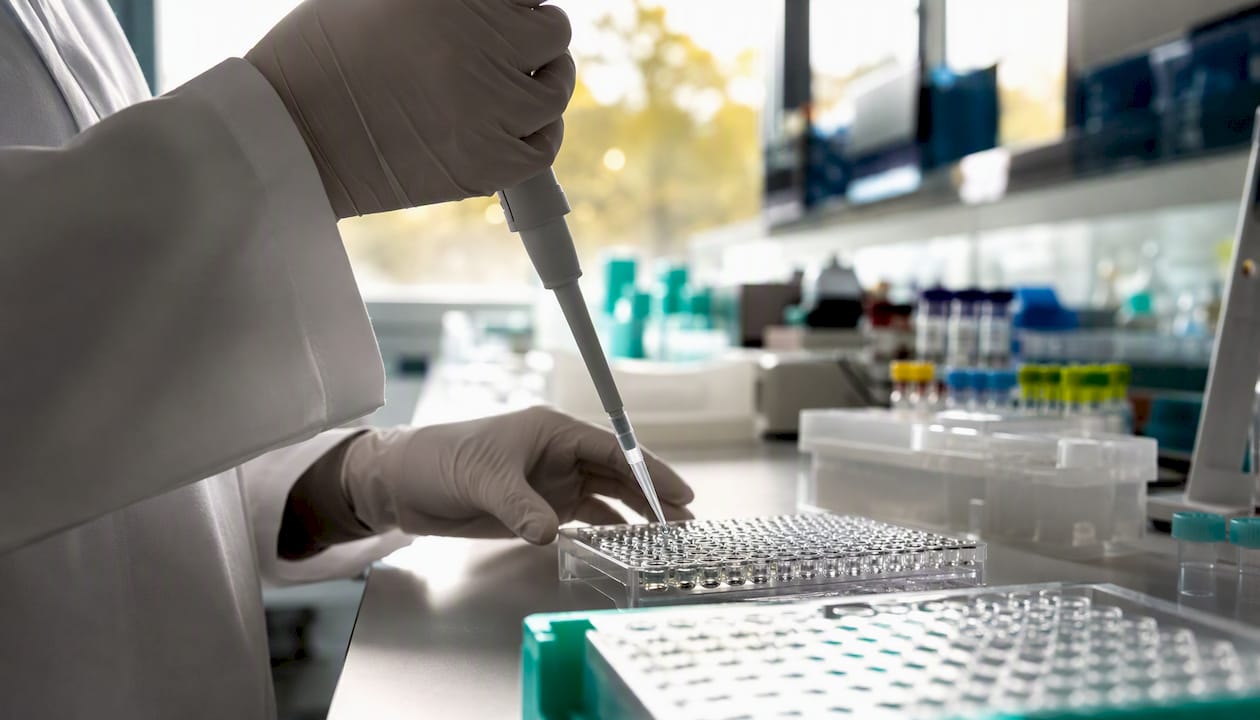
Screening and selection aren't the same decision. Screening evaluates every variant individually and ranks them, which gives you quantitative data but caps throughput around 10³ to 10⁵ variants per day on standard microtiter plate workflows. Selection applies survival pressure so only functional variants persist, which scales into the millions but gives you binary pass/fail data rather than a ranked list. If you need to know how much better a variant is, screen. If you just need to find the needle in a huge haystack, select.
A workable directed evolution workflow runs: library design (choose mutagenesis strategy and diversity target) → transform or build (get the library into cells or in vitro format) → screening or selection (apply the platform matched to your readout) → sequence analysis (identify enriched or top-ranked variants) → validation (confirm hits in a clean, independent assay).
- Match mutagenesis strategy to your knowledge gap, not to what's convenient in the lab.
- Always run an unmutated parent control through the same screening pipeline.
- Sequence more hits than you think you need. False positives are common at the tails of any distribution.
- Budget for a validation round. A hit on day one screening data is not a confirmed improvement.
Pro Tip: Spike a known-active control into every plate or droplet run at a low, calculated frequency. If your recovery rate for that control drifts across replicates, your assay noise is higher than your library signal, and any "hits" you're chasing are probably artifacts.
Rational Design: Structure-Guided Tools and Their Limits
Rational design earns its keep when you have a reliable structure and a specific hypothesis about which residues control the property you're chasing. Skip it when your structural confidence is low or when the target property depends on dynamics a static model can't capture.
Choose rational design when you have an experimentally solved structure or a high-confidence AlphaFold2 model, and when you can point to a specific catalytic residue, binding pocket, or loop and explain why changing it should help. If you're guessing at mechanism, rational design turns into expensive trial and error dressed up as computation.
Three tools dominate practical rational design workflows. Rosetta handles structure prediction, ligand docking, and mutation scanning through its ddG protocols, and its modularity makes it the default choice for teams running custom pipelines. FoldX calculates the energetic effect of point mutations on protein stability and binding, and its speed makes it a common first-pass filter before committing to more expensive simulations. HotSpot Wizard identifies mutable hotspots by combining structural, evolutionary, and dynamics data specifically for altering enzyme activity, selectivity, and stability, which makes it useful earlier in the pipeline than Rosetta or FoldX, before you've settled on candidate residues.
A practical pipeline looks like this: retrieve or generate a structural model → identify hotspots using tools like HotSpot Wizard or conservation analysis → run in silico ΔΔG and binding predictions with FoldX or Rosetta → design a focused mutagenesis panel around the top-scoring positions → validate a small set of variants experimentally before scaling up. Structure-based sequence optimization studies show that computational scoring can reliably predict many active-site residues, which is exactly why this pipeline works as a filter rather than a final answer.
- Static structures miss conformational dynamics, so a residue that looks irrelevant in one snapshot can matter enormously during catalysis.
- Epistasis, where two mutations interact non-additively, breaks single-mutation ΔΔG predictions regularly.
- Computational scores rank candidates; they don't replace a wet-lab assay.
A common failure mode is that a team predicts a stabilizing mutation with strong FoldX scores, builds it, and finds activity dropped instead. The likely culprit is a mutation near an active site loop that stabilizes a closed conformation at the cost of substrate access, an effect no static ΔΔG calculation captures well. This is exactly why computational protein design workflows pair modeling with lean experimental checkpoints rather than betting everything on the top-ranked prediction.
Semi-Rational Design: Hotspot Libraries That Cut Screening Burden
Semi-rational design splits the difference between rational design's precision and directed evolution's exploratory reach, and it does so by narrowing where you randomize rather than how much you randomize.
- Identify hotspots computationally or through sequence conservation. Use structural tools or homolog alignments to flag residues near the active site, substrate channel, or known allosteric regions.
- Apply site-saturation mutagenesis at those hotspots only, using restricted or degenerate codon sets rather than full NNK/NNN randomization at every position.
- Build a combinatorial library across the selected sites. Methods like CAST (Combinatorial Active-site Saturation Test) and ISM (Iterative Saturation Mutagenesis) formalize this into a repeatable process, and KnowVolution-style workflows fold in sequence conservation data to prioritize which sites get saturated first.
- Screen the focused library using whatever HTS or plate-based platform matches your assay readout.
- Iterate. Feed the best-performing combinations from round one into a second round of saturation at remaining unexplored positions.
Semi-rational methods reduce library size while improving hit rates by focusing mutation on hotspots informed by computation or conservation data, which is why teams increasingly default to it over blind combinatorial libraries. Its real advantage shows up when you have partial structural information, enough to point at a region of interest but not enough to predict which single mutation will work. Pure rational design demands more structural confidence than you have; pure directed evolution wastes screening capacity on positions that were never going to matter.
Pro Tip: Use restricted codon sets (like the NDT or 19-codon reduced sets) instead of full NNK degeneracy when saturating multiple sites simultaneously. Full randomization at four or five positions balloons your library into the millions; a restricted set keeps combinatorial complexity screenable while still covering meaningfully diverse chemistries.
High-Throughput Screening and Selection: Matching Platform to Readout
The platform decision comes down to one question: what does your assay actually measure, and how many variants do you need to get through per round? Each platform below solves a different version of that problem.
FACS-based sorting works when your readout is fluorescence, either intrinsic to the product or generated through a fluorogenic substrate that stays associated with the cell or droplet producing it. It handles roughly 10⁶ to 10⁷+ cells or droplets per hour, making it one of the fastest options available once your assay is compatible.
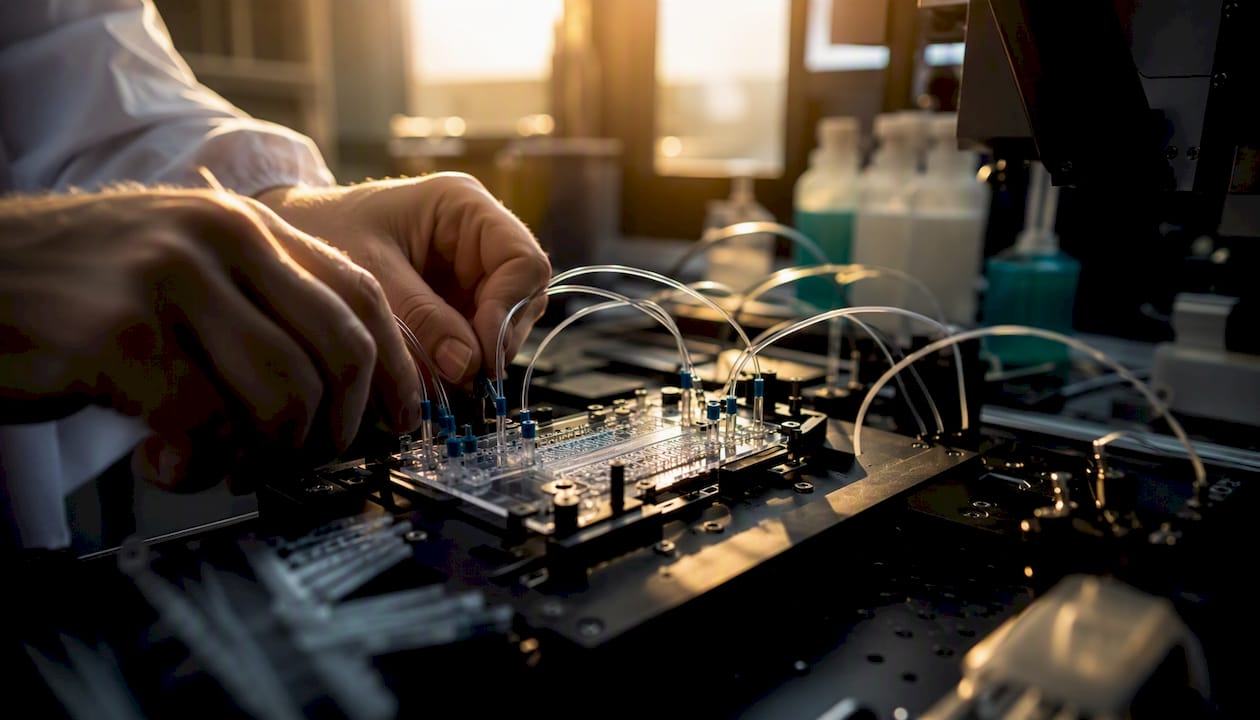
Droplet microfluidics compartmentalizes single cells or in vitro reactions inside water-in-oil droplets, keeping genotype and phenotype linked without a physical container per variant. This is the backbone of most modern ultra-HTS campaigns and pairs naturally with FACS for readout.
Double emulsion methods convert those water-in-oil droplets into water-in-oil-in-water format specifically so standard FACS instruments, built for aqueous samples, can sort them directly. This step matters because plain single emulsions generally are not compatible with FACS without further processing.
Plate-based screens remain the simplest option and the easiest to troubleshoot, running colorimetric or fluorogenic assays across 96, 384, or 1536-well formats. Throughput tops out around 10³ to 10⁵ variants per day depending on automation, far below droplet or FACS methods but perfectly adequate for smaller focused libraries.
Compartmentalized Self-Replication (CSR) links an enzyme's function directly to its own gene replication inside a compartment, so improved variants amplify themselves relative to weaker ones. It's particularly suited to enzymes involved in nucleic acid synthesis or replication-linked activities.
Phage-Assisted Continuous Evolution (PACE) runs continuous rounds of mutation and selection using phage that only propagate when the target enzyme performs the desired function, compressing what would be dozens of manual rounds into a continuous culture process running over days.
Phage display and ribosome display present variant proteins on phage particles or ribosome complexes tied to their encoding mRNA or DNA, making them strong choices for binding-based selections rather than catalytic turnover screens.
| Platform | Typical throughput | Best-fit readout | Main technical constraint |
|---|---|---|---|
| FACS-based sorting | 10⁶–10⁷+ per hour | Fluorescence, fluorogenic substrates | Requires stable fluorescent linkage to genotype |
| Droplet microfluidics | 10⁶–10⁷+ per run | Fluorogenic, some colorimetric | Substrate diffusion between droplets |
| Double emulsion + FACS | 10⁶–10⁷+ per run | Fluorescence-compatible with FACS sorting | Emulsion polydispersity affects consistency |
| Plate-based screens | 10³–10⁵ per day | Colorimetric, fluorogenic, absorbance | Lower throughput ceiling |
| CSR | Selection-scale (millions) | Replication-linked activity | Limited to replication-coupled functions |
| PACE | Continuous, days per multi-round cycle | Phage propagation-linked activity | Requires specialized continuous culture setup |
| Phage/ribosome display | Selection-scale (millions to billions) | Binding affinity, not catalytic turnover | Poor fit for kinetic activity screening |
Every platform on that list has a failure mode worth knowing before you commit equipment time to it. Droplet methods suffer when substrates or products diffuse across the oil interface, contaminating neighboring droplets and generating false positives. Maintaining genotype–phenotype linkage is a frequent bottleneck across HTS generally, and advanced droplet or hydrogel encapsulation is the standard fix when plate-based linkage breaks down at scale. Emulsion polydispersity and uneven droplet sizes skew concentration-dependent readouts. And in vitro display methods run into transformation or ligation limits that cap practical library size well below what a purely computational library design might suggest.
Before choosing a platform, confirm three things: the readout your assay actually produces, the throughput your timeline realistically demands, and whether your lab or a specialized provider has the equipment to run it reliably. A mismatch here costs more time than almost any other decision in the whole project.
Assay and Reaction Optimization: Getting Reliable Data Before You Screen
No screening platform, no matter how fast, produces useful data from a noisy assay. Design of Experiments (DoE) exists specifically to find robust reaction conditions systematically, rather than through one-factor-at-a-time guessing that misses interaction effects between variables.
- List every factor that plausibly affects your signal: buffer composition, pH, temperature, substrate concentration, enzyme concentration, cofactor availability, and ionic strength all belong on this list by default.
- Choose a factorial or response surface methodology (RSM) design rather than testing one variable while holding others constant. A full or fractional factorial design catches interaction effects, like a pH optimum that shifts depending on ionic strength, that one-factor testing misses entirely.
- Run pilot reactions across the designed condition matrix and measure signal window, background, and variability at each point.
- Calculate assay quality metrics before scaling up, most importantly the Z'-factor, which quantifies the separation between positive and negative controls relative to their combined variability.
- Set acceptance criteria for HTS transfer: adequate dynamic range, linearity across the expected activity range, and reproducible controls across plates or droplet runs.
- Run a pilot HTS batch at reduced scale before committing to the full campaign, checking automation consistency and QC criteria hold up outside the optimization bench.
Statistic Callout: The Z'-factor is the standard metric for HTS assay quality, calculated from the means and standard deviations of your positive and negative controls. A Z' above 0.5 generally indicates an assay robust enough for high-throughput screening; below that, expect your hit calls to be unreliable regardless of how good your library is. Full factorial designs work well for four or fewer factors; once you're testing five or more variables, response surface methodology (RSM) designs like central composite designs become more efficient at mapping the optimum without an exponential increase in runs.
Teams that skip this step and go straight to library screening usually discover the problem the expensive way: a promising hit that turns out to be noise, or worse, a real improvement buried under assay variability large enough to mask it. Our enzyme activity enhancement guide covers specific tactics for pushing signal windows wider once your baseline DoE work is done.
Stabilization and Process Engineering: Keeping Activity Where You Put It
Activity improvements mean little if the enzyme falls apart before you can use it. Stabilization strategies address thermostability, operational stability across reaction cycles, and shelf life, and each comes with a different trade-off between activity retention and practical deployment cost.
Immobilization attaches enzyme to a solid or semi-solid carrier, ranging from traditional resins to newer metal-organic framework (MOF) supports that offer high surface area and tunable pore chemistry. It enables enzyme reuse across multiple reaction cycles and simplifies downstream separation, but it often reduces effective activity due to mass transfer limitations and can suffer from enzyme leaching off the carrier over time.
Fusion tags, appending a stabilizing protein domain to your enzyme, can improve solubility and folding without altering the active site, though the added domain sometimes interferes with substrate access or downstream purification steps.
Consensus design builds a variant using the most common amino acid at each position across an aligned family of homologs, often producing a meaningfully more thermostable enzyme without ever touching the active site, since consensus positions rarely overlap with catalytic residues.
Glycosylation and PEGylation modify the enzyme's surface chemistry to improve solubility, reduce aggregation, and extend circulating or shelf half-life, common in enzymes destined for therapeutic or extended-storage applications, though both modifications can hinder access to buried or partially occluded active sites.
Cross-linking, chemically bonding enzyme molecules to each other or to a support matrix, produces rigid, highly stable aggregates (CLEAs, cross-linked enzyme aggregates) that resist unfolding under process stress, at the cost of reduced flexibility that can sometimes lower catalytic turnover.
- Match carrier cost against expected reuse cycles. A cheap resin that fails after three cycles can cost more per use than an expensive MOF good for fifty.
- Track leaching rate explicitly across cycles. Activity loss that looks like "the enzyme is unstable" is sometimes actually the enzyme walking off the support.
- Test immobilized activity against free-enzyme activity under identical conditions before attributing any drop to the carrier itself; some of it may be intrinsic to the mutation set, not the immobilization step.
- For scale-up failures, check enzyme loading density first. Overloading a carrier reduces per-molecule accessibility and tanks apparent activity even when the enzyme itself is fine.
Bayesian optimization approaches for hybrid categorical-continuous variable spaces have accelerated discovery of immobilized-enzyme conditions specifically because carrier choice, loading density, and buffer conditions form exactly the kind of mixed discrete-continuous search space that traditional grid searches handle poorly. Our industrial enzyme optimization guide walks through carrier selection trade-offs in more process-specific detail.
Computational and Machine Learning Approaches: Narrowing the Search Before You Screen
Computational tools don't replace wet-lab validation, but they compress the number of variants you need to physically test to hit a given improvement target. That compression is the entire value proposition.
Four tool categories cover most practical workflows today. ΔΔG predictors like FoldX and Rosetta's ddG protocols estimate how a mutation shifts stability or binding energy relative to wild type, useful as a fast filter before committing to synthesis. Structure prediction tools including AlphaFold2 and ESM-Fold generate high-confidence models for enzymes lacking experimental structures, which has opened rational and semi-rational design to targets that were computationally inaccessible even five years ago. Bayesian optimization and active learning frameworks sequentially propose the next most informative experiment to run, rather than testing a fixed grid, which matters enormously when each experimental data point is expensive. Sequence-based ML models, often trained on deep mutational scanning data, learn fitness landscapes directly from sequence without requiring a structure at all.
Deep mutational scanning combined with next-generation sequencing creates exactly the kind of large-scale mutability landscape these sequence-based models need, mapping how every amino-acid substitution across a target affects fitness in one experiment rather than one mutation at a time.
A hybrid in silico and in vitro cycle generally runs: generate or assemble a training dataset (from DMS, prior screening rounds, or public data) → train a predictive model → prioritize candidate variants by predicted score → validate the top candidates experimentally → feed those results back into the model for the next round. Bayesian optimization has demonstrably accelerated parameter search for immobilized enzyme conditions, cutting the number of costly physical trials needed to find near-optimal carrier and buffer combinations. Machine learning and statistical models like PLS and Gaussian processes have similarly been used to prioritize variants for thermostability and activity, though their performance depends heavily on how representative the training data actually is.
- Predictive models rank candidates; they don't guarantee improvement, so budget wet-lab time for validation regardless of confidence scores.
- Models trained purely on computational data often generalize poorly to real assay conditions with dynamic conformational effects.
- Structure prediction confidence scores (like AlphaFold2's pLDDT) should factor into how much you trust downstream ΔΔG predictions built on that model.
Pro Tip: Feed small, real experimental datasets into your model early, even just twenty or thirty measured variants, rather than waiting to accumulate a large batch before the first training run. Iterative feedback between experiments and ML models is what keeps predictions grounded in your actual assay behavior; models trained purely on in silico data or public datasets tend to drift from what your specific system actually does.
Design–Build–Test–Learn: Tracking Progress With the Right Metrics
A DBTL cycle only works if you're measuring the right things consistently across rounds. Without a fixed metric set, "improvement" becomes a moving target that different team members interpret differently.
The core metrics worth tracking on every variant: kcat (turnover number, how fast the enzyme converts substrate to product once bound), Km (substrate concentration at half-maximal velocity, a proxy for binding affinity), kcat/Km (catalytic efficiency, the single number most useful for ranking variants against each other), Tm (melting temperature, a thermostability proxy), half-life (t1/2) under operational conditions, specific activity (activity per unit mass of enzyme), and yield from expression or production runs.
| Metric | Academic/discovery-stage context | Industrial/process context |
|---|---|---|
| kcat/Km | Used to rank variants relative to wild type within a screen | Used against a defined process target tied to cost-per-unit-product |
| Tm | Tracked as a stability indicator alongside activity gains | Set against minimum operating temperature margins for the process |
| Half-life (t1/2) | Measured under standard lab storage/assay conditions | Measured under actual process conditions across multiple reuse cycles |
| Reproducibility | Triplicate measurements within one screening round | Cross-batch, cross-lot reproducibility required before scale-up sign-off |
Version everything. Sequence identifiers, assay buffer lot numbers, plate layouts, and raw data files all need to be traceable back to the exact round they came from, because a DBTL cycle without version control turns "which mutation gave us that improvement" into a guessing game three rounds later. Automated in vivo DBTL platforms built around hypermutation systems like OrthoRep, EvolvR, and MutaT7 reduce this bookkeeping burden considerably by tying library generation, screening, and sequence analysis into one continuous pipeline rather than a series of manual handoffs.
Know when to stop iterating on one strategy. Improving catalytic activity often trades off with stability, so if three consecutive rounds produce activity gains under 10% while stability metrics stagnate or decline, that's a signal to change strategy, add computational guidance, or shift focus to stabilization rather than pushing another round of the same library design.
Choosing Your Path: A Decision Checklist
Run through this sequence before committing lab time or budget to any single method.
- Define your primary goal precisely. Activity, specificity, stability, expression yield, and process-condition tolerance each point toward different starting methods, and conflating them wastes a round.
- Confirm you have a usable readout. No fluorogenic, colorimetric, or growth-based assay means no screening platform will help you yet; fix the assay first.
- Assess your structural knowledge. High-confidence structure plus a specific hypothesis points to rational design. Partial structural knowledge points to semi-rational. No structural insight points to directed evolution.
- Estimate required throughput against your timeline. Hundreds of variants over weeks suits plate-based screening. Millions of variants suits droplet, FACS, or selection-based platforms and demands specialized equipment access.
- Check budget against platform cost. PACE, CSR, and microfluidic droplet setups carry real equipment and expertise costs that plate-based screening doesn't.
- Confirm genotype–phenotype linkage is achievable with your chosen platform before building the library, not after.
- Run a small pilot library before committing to the full-scale build. A pilot at one-tenth scale exposes assay noise problems cheaply.
- Validate your assay's Z'-factor before the first real screening round, not after a disappointing one.
- Confirm your team or partner can actually maintain genotype-to-phenotype traceability at your target throughput.
Certain conditions should stop a project before it starts, or push it toward outside help. No robust readout after genuine assay development effort is one. An assay that produces inconsistent Z'-factors across replicate plates despite optimization is another. And needing throughput beyond what your available equipment supports, without a realistic path to acquiring or accessing that equipment, is a clear signal to look outward rather than force a mismatched platform to work.
When an External Enzyme Optimization Partner Makes Sense
Bringing in outside capability makes sense under a few specific, recognizable conditions, not as a default fallback whenever a project gets hard.
The clearest signal is needing automation or ultra-HTS capacity, droplet microfluidics, FACS-based sorting, or PACE-style continuous evolution, that your lab doesn't have installed and can't justify acquiring for one project. A second signal is timeline pressure: if a partner's established DBTL pipeline can compress six months of iterative rounds into a few weeks through automation, that time value often outweighs the coordination cost. A third is needing deep computational integration, ΔΔG modeling, Bayesian optimization, or ML-guided prioritization, layered tightly with wet-lab validation in a way that's hard to build from scratch for a single project.
When evaluating a partner, ask specifically about their DBTL workflow maturity, how they handle secure data management for proprietary sequences and assay data, whether they've transferred assays from client labs successfully before, and whether they define concrete pilot milestones before committing to a full-scale campaign. Reproducible deliverables, meaning documented protocols and versioned data you can act on independently afterward, matter more than a single impressive result.
Before onboarding, prepare: your target enzyme sequence and any existing structural data, a clear description of your assay and its current validation status (or lack of one), explicit success criteria stated as numbers where possible, and clarity on IP ownership and data-sharing terms before any samples move. Innovabiotech's enzyme optimization services are built around exactly this kind of staged engagement, starting with a discovery phase before committing to a full screening campaign.
How We Approach Enzyme Optimization Projects
Most engagements we run at Innovabiotech follow a similar shape, even though the science underneath varies enormously from project to project.
- We start with discovery: reviewing the target enzyme's known structure or generating a model, understanding the client's assay and readout, and defining what "success" means in measurable terms before writing a single sequence.
- From there we build a focused library, usually semi-rational rather than a blind combinatorial approach, because narrowing the search space early saves screening time later.
- HTS or selection comes next, matched to whatever readout the assay actually supports, whether that's plate-based, droplet-based, or a selection system.
- ML-guided prioritization runs in parallel wherever we have enough early data to train something useful, feeding predicted rankings back into which variants get validated first rather than screening blind.
- Scale-up validation closes the loop, confirming that a hit identified at small scale holds up under process conditions that matter for the client's actual use case.
A representative timeline: a pilot phase of two to four weeks to confirm assay robustness and build the first focused library, followed by iteration rounds running two to three weeks each depending on platform throughput, then a scale validation phase once a candidate clears the activity and stability bar. Most projects run through two or three iteration rounds before diminishing returns signal it's time to either lock in a candidate or change strategy.
The trade-off we manage most often is speed against depth of exploration. A client under timeline pressure sometimes wants us to lock in a "good enough" variant after one round rather than run a second round that might find something meaningfully better. And activity versus stability comes up constantly, since a mutation that boosts turnover by 15% but drops thermostability by several degrees isn't automatically a win depending on the downstream process conditions the enzyme needs to survive.
Get Enzyme Optimization Support From Innovabiotech
If your team is weighing directed evolution against rational design, or trying to get a droplet screening campaign off the ground without in-house microfluidics equipment, Innovabiotech runs enzyme optimization projects end to end rather than handing you a report and walking away. We support activity enhancement, stability engineering, specificity shifts, and computational design work, typically for biopharma and biotech R&D teams that need results tied to a real process or product timeline, not an academic exercise.
When you reach out, come with your target enzyme's sequence, whatever assay or readout you're currently using (or planning to use), your specific optimization goal, and your rough timeline. That's enough for us to scope a pilot phase and give you real milestones instead of vague estimates. Visit the enzyme optimization services page to see what a typical engagement includes, or reach out directly to talk through your specific project and get a proposal started.
Selected Primary Sources and Further Reading
- Enzyme Engineering: From Classical Strategies to AI: a review-level classification of the three primary engineering strategies, useful as a foundational reference for method taxonomy.
- Compartmentalization and high-throughput screening methods (PMC8470892): the most detailed available breakdown of emulsion, hydrogel, and microcapillary-based compartmentalization techniques.
- Droplet microfluidics and FACS-based enzyme evolution (PMC11193041): concrete examples of droplet-based evolution campaigns and their throughput advantages.
- DMS and mutability landscapes (RSC, 2022): the reference for deep mutational scanning methods and mutability landscape construction.
- Current status and emerging frontiers in enzyme engineering: an industrial perspective: background on semi-rational design methods like CAST/ISM and KnowVolution.
- Sequence optimization and designability of enzyme active sites (PNAS): the foundational study on computational prediction of active-site residues.
- Machine learning and statistical modeling applications in enzyme engineering: a practical look at PLS and Gaussian process applications and their data-quality dependencies.
- Parallelized hybrid-space Bayesian optimization for immobilized enzymes: best resource for understanding Bayesian optimization applied to mixed categorical-continuous experimental spaces.
- Automated in vivo enzyme engineering accelerates biocatalyst optimization: the reference for hypermutation systems and automated DBTL platforms.
- Trade-offs between activity and stability in enzyme engineering (PMC7384606): essential reading on when to change strategy after diminishing returns.
Sources
- Enzyme-Engineering-From-Classical-Strategies-to-AI
- Compartmentalization and high-throughput screening methods (PMC8470892)
- DMS and mutability landscapes (RSC, 2022)
- Parallelized hybrid-space Bayesian optimization for immobilized enzymes (Nature Communications)
- Sequence optimization and designability of enzyme active sites (PNAS)
FAQ
Can you provide a list of enzyme optimization techniques?
The core categories are directed evolution, rational design, semi-rational design, high-throughput screening and selection (FACS, droplet microfluidics, CSR, PACE, phage/ribosome display), assay and reaction optimization through DoE, stabilization and immobilization strategies, and computational or ML-guided design tools like Rosetta, FoldX, and HotSpot Wizard.
What are the seven main types of enzymes?
Enzymes are classified by reaction type into oxidoreductases, transferases, hydrolases, lyases, isomerases, ligases, and translocases, based on the International Union of Biochemistry and Molecular Biology's EC numbering system.
What are the four main catalytic strategies enzymes use?
Enzymes typically speed up reactions through acid-base catalysis, covalent catalysis, metal ion catalysis, and proximity/orientation effects that bring substrates into favorable positions for reaction.
How do you speed up enzyme activity?
You can increase enzyme activity through directed evolution or rational mutagenesis targeting catalytic residues, by optimizing reaction conditions like pH, temperature, and substrate concentration through DoE, or by using computational tools such as FoldX and Rosetta to predict activity-enhancing mutations before testing them experimentally.
When should I bring in an outside partner instead of running optimization in-house?
Outsourcing makes sense when your project needs ultra-high-throughput platforms like droplet microfluidics or PACE that your lab doesn't have, when timeline pressure makes an established DBTL pipeline valuable, or when you need computational modeling tightly integrated with experimental validation; Innovabiotech structures these engagements around a discovery phase and defined pilot milestones before scaling.