
TL;DR:
- Protein structure is essential for understanding how drugs bind to targets and guides successful drug design. Combining experimental methods like X-ray crystallography and cryo-EM with AI predictions enables comprehensive structural insights, improving the efficiency of drug discovery. Considering protein flexibility and conformational dynamics is crucial to develop effective and reliable therapeutics.
Protein structure is the precise three-dimensional arrangement of amino acids that defines a protein's functional binding sites, and it is the foundational determinant of successful drug design. Without knowing the exact shape and chemical environment of a target protein, designing a molecule that binds selectively and potently is guesswork at best. Structure-based drug design (SBDD) has already delivered blockbuster therapeutics including HIV protease inhibitors, imatinib, and vemurafenib. These drugs exist because researchers understood why protein structure matters in drug design before synthesizing a single compound.
Why protein structure matters in drug design: the 3D foundation
Protein tertiary structure determines the geometry and chemical environment of active and binding sites, directly controlling how a drug molecule can interact with its target. The four levels of protein structure build on each other: primary sequence sets the amino acid order, secondary structure creates local folds like alpha helices and beta sheets, tertiary structure defines the full 3D shape of a single chain, and quaternary structure describes how multiple chains assemble. For drug designers, tertiary and quaternary arrangements are where the real work happens.
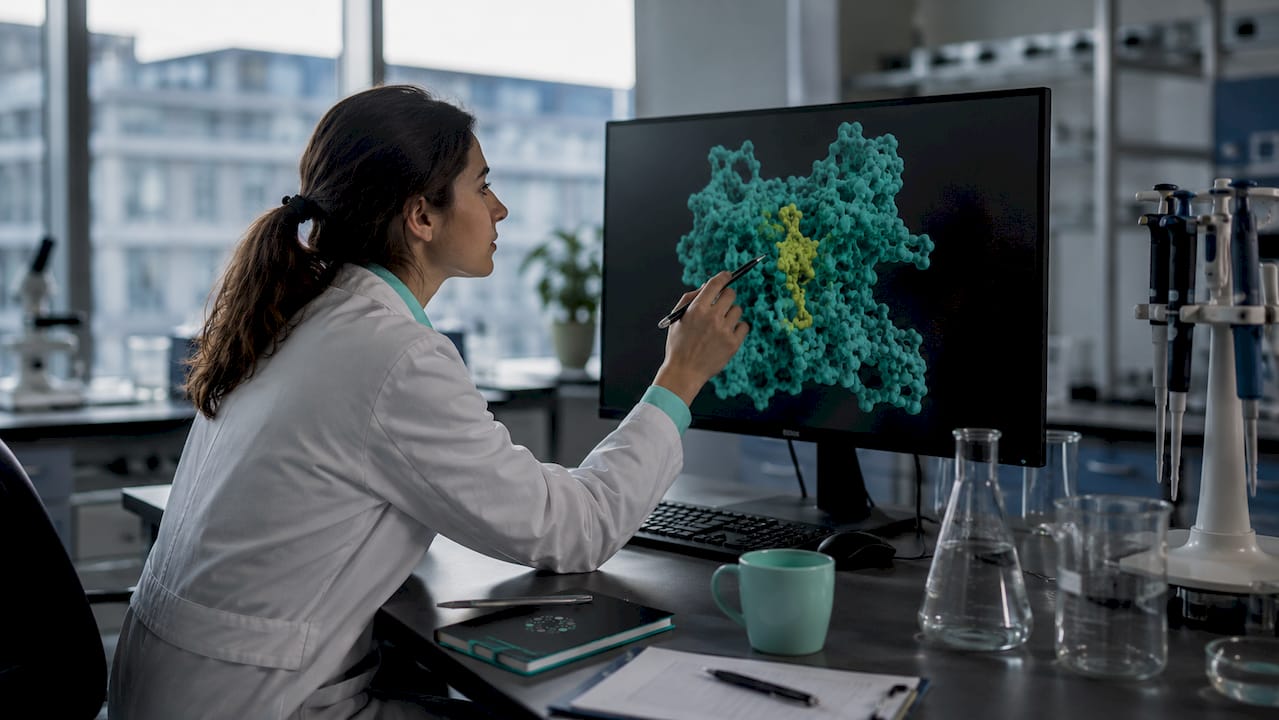
The binding pocket geometry dictates which molecules can enter, orient correctly, and form productive contacts. A drug candidate must complement the pocket's shape, charge distribution, and hydrophobicity with near-perfect fit. Protein tertiary structure directly governs this environment, which is why even a single amino acid substitution can abolish binding or create resistance.
Misfolding diseases make this point sharply. In conditions like Alzheimer's disease and Parkinson's disease, proteins adopt aberrant conformations that expose new surfaces or bury normal binding sites. Designing drugs that correct or stabilize these conformations requires knowing the native structure and the misfolded state with equal precision. Misfolding diseases highlight the critical need to understand both native and aberrant protein structures before any therapeutic strategy can succeed.
Protein-ligand binding follows the principle of structural complementarity. The lock-and-key model is a useful starting point, but the induced-fit model is more accurate: proteins flex and adjust upon ligand binding. This conformational flexibility means a static snapshot of a protein is never the complete picture.
Key structural factors that govern drug-protein interaction:
- Shape complementarity between ligand and binding pocket
- Electrostatic matching of charged and polar residues
- Hydrophobic contacts driving binding affinity
- Hydrogen bond networks stabilizing the bound complex
- Conformational flexibility of the protein upon ligand binding
Pro Tip: When analyzing a binding site, always compare the apo (unbound) and holo (bound) structures. The conformational shift between these states often reveals cryptic pockets that are invisible in the apo structure alone.
What methods reveal protein structure for drug discovery?
Determining a protein's three-dimensional structure requires specialized experimental and computational methods, each with distinct strengths. X-ray crystallography and cryo-EM are the two most widely integrated techniques at major pharmaceutical firms, used to inform target validation, lead optimization, and structure-activity relationship (SAR) analysis.
X-ray crystallography delivers atomic resolution data for small to medium proteins and excels at mapping active sites with sub-angstrom precision. Its limitation is the requirement for high-quality crystals, which many membrane proteins and intrinsically disordered proteins resist forming. Cryo-electron microscopy captures large complexes and multiple conformational states without crystallization, making it the method of choice for targets like GPCRs, ion channels, and multiprotein assemblies.
Nuclear magnetic resonance (NMR) spectroscopy provides solution-state structural data and captures protein dynamics in near-physiological conditions. Hydrogen-deuterium exchange mass spectrometry (HDX-MS) maps solvent accessibility and conformational changes across the protein surface, which is particularly useful for identifying allosteric sites. These techniques complement crystallography and cryo-EM by adding dynamic information that static structures cannot provide.
Computational tools have transformed the field. AlphaFold, developed by DeepMind, predicts protein structures from sequence alone with accuracy that rivals experimental methods for many protein families. This has unlocked structural data for thousands of previously unsolved targets. Generative AI models now go further, designing novel molecules tailored to specific 3D binding pockets and expanding the accessible chemical space well beyond what traditional virtual screening can reach.
| Method | Best use case | Key limitation |
|---|---|---|
| X-ray crystallography | Atomic resolution, active site mapping | Requires crystallizable protein |
| Cryo-EM | Large complexes, multiple conformations | Lower resolution for small proteins |
| NMR spectroscopy | Solution dynamics, flexible regions | Size limit (~50 kDa) |
| HDX-MS | Allosteric sites, conformational changes | Indirect structural inference |
| AlphaFold / AI prediction | Unsolved targets, rapid hypothesis generation | Requires experimental validation |
Pro Tip: Combine cryo-EM for initial target characterization with X-ray crystallography for high-resolution co-crystal structures during lead optimization. The two methods are complementary, not competing.
How structural data drives each stage of the drug discovery pipeline
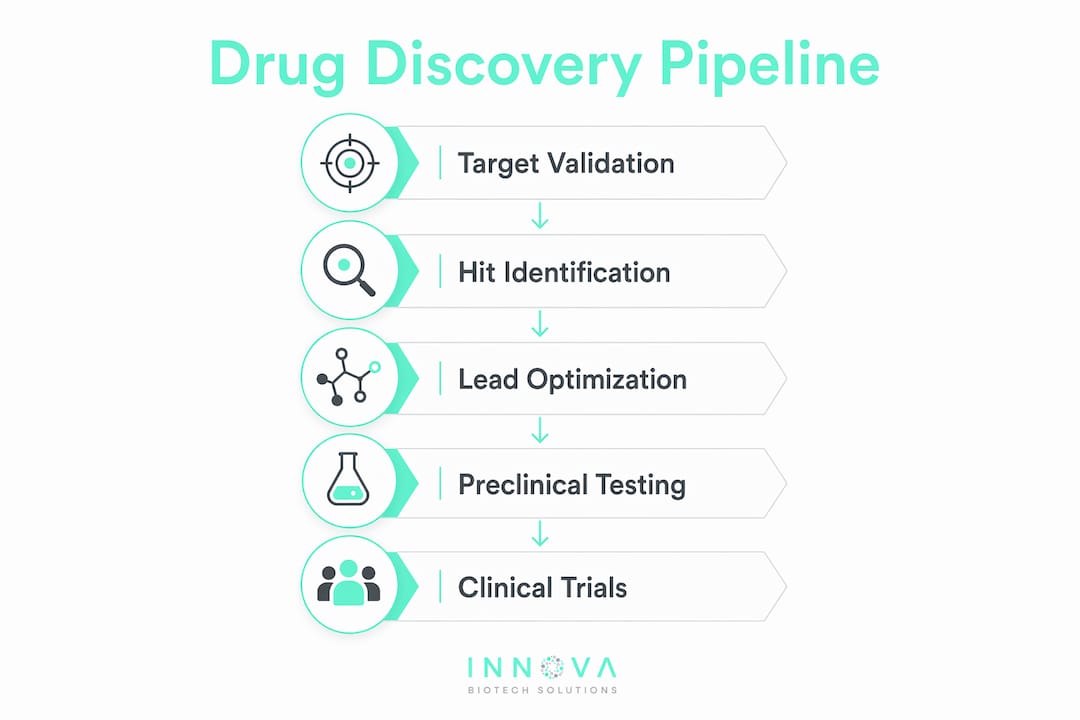
Structural biology acts as the anchor for the design-make-test-analyze (DMTA) cycle, connecting chemical modifications to functional outcomes at every stage from target validation through candidate selection.
Target validation
Confirming that a protein is druggable requires identifying a well-defined binding pocket with the right geometry and chemical character. Structural data from X-ray crystallography or cryo-EM confirms whether a pocket exists, how deep it is, and whether it can accommodate a drug-sized molecule. Without this confirmation, teams risk investing in targets that cannot be addressed with small molecules or peptides.
Hit identification and co-crystal structures
Once a screening campaign identifies initial hits, co-crystal structures of the protein bound to those hits reveal exactly how each molecule sits in the binding site. This structural feedback is the difference between knowing a compound binds and understanding why it binds. Co-crystal structures during hit-to-lead optimization guide medicinal chemists to add, remove, or reposition functional groups with atomic-level precision.
Lead optimization
Lead optimization is where structural feedback loops compress timelines most dramatically. Iterative cycles of structure determination, computational modeling, and synthesis allow teams to refine binding affinity, selectivity, and drug-like properties simultaneously. The shift from empirical screening to rational, structure-guided design improves the probability of stable drug-target binding by focusing modifications on specific chemical residues identified in the structure.
Key structural contributions at each pipeline stage:
- Target validation: confirming pocket druggability and geometry
- Hit identification: co-crystal structures revealing binding mode
- Lead optimization: iterative structural feedback refining affinity and selectivity
- Developability assessment: surface electrostatics and dynamics predicting solubility and aggregation risk
- Candidate selection: structural evidence supporting potency, selectivity, and safety profiles
Predicting developability early
Structural knowledge supports early prediction of developability risks including poor solubility and aggregation tendency. Analyzing protein surface electrostatics and dynamics allows teams to filter out liabilities before resource-intensive synthesis begins. This early filtering is one of the most underappreciated benefits of structural biology in drug development. Catching a liability at the structural analysis stage costs a fraction of what it costs to discover it in a preclinical toxicology study.
How is AI changing structure-based drug design?
Generative AI has shifted structure-based drug design from a largely interpretive discipline to a generative one. Where traditional virtual screening evaluates existing compound libraries against a known structure, AI-powered molecular generation creates entirely new molecules designed from scratch to fit a specific binding pocket. This expands the accessible chemical space by orders of magnitude.
AlphaFold's impact on the field is structural. Before AlphaFold, a large fraction of human proteins had no experimentally determined structure. Researchers working on novel targets faced a fundamental data gap. AlphaFold filled much of that gap, providing predicted structures that enable computational protein design workflows to proceed even when experimental structures are unavailable.
The practical limitations of AI-generated designs are real and should not be minimized. Generative models can propose molecules that look excellent in silico but fail in synthesis or show unexpected off-target activity. Experimental validation of AI-generated hits remains a bottleneck. The iterative integration of computational predictions with experimental structural data is the critical checkpoint that separates viable drug candidates from computational artifacts.
The most productive AI-driven drug design programs treat generative models as hypothesis generators, not answer machines. Every AI-proposed structure needs experimental confirmation before it earns a place in the pipeline.
The future of AI in this space lies in tighter integration within the DMTA cycle. Models that learn from each experimental result and update their predictions in real time will compress the cycle from months to weeks. Structural bioinformatics platforms that integrate experimental and computational data across the full development continuum are already moving in this direction.
Key Takeaways
Protein structure is the single most critical determinant of drug-target interaction quality, and every stage of the drug discovery pipeline depends on accurate structural knowledge to produce viable candidates.
| Point | Details |
|---|---|
| Structure defines druggability | Tertiary and quaternary protein structure determines whether a binding pocket exists and can be targeted. |
| Method selection matters | Combining X-ray crystallography and cryo-EM maximizes structural insight and overcomes individual technique limitations. |
| Structural feedback compresses timelines | Co-crystal structures during lead optimization allow atomic-level refinement of binding affinity and selectivity. |
| Early developability screening saves resources | Analyzing surface electrostatics and dynamics filters out liabilities before costly synthesis begins. |
| AI requires experimental validation | Generative AI expands chemical space but every AI-proposed candidate needs structural confirmation before advancing. |
Conformational dynamics: what static structures miss
The most common mistake I see in structure-based drug design programs is treating a single crystal structure as the definitive picture of a target. Proteins are not static objects. They breathe, flex, and shift between conformational states on timescales ranging from nanoseconds to seconds. A drug designed against one snapshot can fail completely when the protein adopts a different conformation in a cellular environment.
The distinction between apo and holo states is where many programs stumble. Conformational dynamics of proteins, particularly the differences between unbound and bound states, must be incorporated into design decisions to avoid suboptimal binding predictions. I have seen lead series abandoned late in optimization because the team did not account for a flexible loop that closed over the binding site upon ligand binding, creating a steric clash that no static model predicted.
The teams that succeed are the ones that treat structural data as a continuous input, not a one-time deliverable. They run molecular dynamics simulations alongside crystallography. They use HDX-MS to map conformational changes across the protein surface. They build conformational ensembles rather than relying on a single representative structure. This approach takes more time upfront, but it prevents the far more expensive failures downstream.
The other underappreciated factor is developability. Structural insights that predict aggregation risk or poor solubility at the lead stage are worth more than any potency number. A compound that binds at 1 nM but aggregates in formulation is not a drug candidate. Structural biology, used correctly, catches these problems before they consume years of development effort.
— Hooman
Protein structure services from Innovabiotech
Innovabiotech works directly with drug discovery teams that need structural and computational expertise applied to real pipeline challenges.
The team at Innovabiotech brings together computational biology, bioinformatics, and protein engineering services to support target characterization, hit-to-lead optimization, and candidate refinement. For teams working on peptide-based therapeutics, Innovabiotech's peptide design and optimization services apply structural and AI-driven methods to design candidates with defined binding modes and favorable developability profiles. Every project is handled with direct scientific collaboration from initial consultation through delivery, with full transparency at each stage.
FAQ
What is structure-based drug design?
Structure-based drug design (SBDD) is a method that uses the three-dimensional structure of a target protein to guide the rational design of drug molecules that bind selectively to its active or allosteric site. SBDD has produced approved drugs including HIV protease inhibitors, imatinib, and vemurafenib.
How does protein folding affect drug efficacy?
Protein folding determines the shape and chemical character of the binding site a drug must occupy. Misfolding alters or destroys that site, which can abolish drug binding or create entirely new targets relevant to diseases like Alzheimer's and Parkinson's.
Which method gives the best protein structure for drug design?
No single method is best for all targets. X-ray crystallography delivers atomic resolution for small to medium proteins, while cryo-EM captures large complexes and multiple conformations. Combining both methods with computational tools like AlphaFold provides the most complete structural picture.
Can AlphaFold replace experimental structure determination?
AlphaFold provides accurate predicted structures for many protein families and has unlocked targets with no prior experimental data. Experimental validation remains necessary, particularly for binding site geometry and conformational states relevant to drug binding.
Why do conformational dynamics matter in drug design?
Static protein structures capture only one snapshot of a flexible molecule. Proteins shift between apo and holo conformations upon ligand binding, and designing against a single snapshot can produce candidates that fail when the protein adopts a different state in a cellular context.