
Fragment linking can turn two millimolar fragment hits into a nanomolar inhibitor, but only when linker design accounts for the thermodynamic cost of the process. The chemistry itself is usually straightforward; the failure mode is almost always energetic, not synthetic. Success depends on three things: keeping each fragment's original binding mode intact, keeping linker strain low in the bioactive conformation, and checking both with structural and thermodynamic data before committing to a synthetic campaign.
TL;DR:
- Successful fragment linking requires confirmed, non-overlapping binding modes and a clear, synthetically feasible linker path within two to three steps.
- The main thermodynamic challenges are configurational entropy loss and linker strain, often offsetting the expected binding energy gains.
- Validating linked compounds depends on structural data, with crystallography, NMR, ITC, and SPR crucial for confirming proper binding mode and detecting strain or entropy issues.
- Rigid, pre-organized linkers typically outperform flexible ones, but hybrid designs that balance adaptability and strain minimization are generally most effective.
- AI-powered linker design tools show promise but still require experimental verification to confirm binding thermodynamics and synthetic feasibility.
Table of Contents
- Why Use Fragment Linking Strategies in Structure-Based Drug Design?
- What Thermodynamic Forces Determine if Linking Succeeds?
- What Experimental Workflow Validates a Linked Compound?
- Which Linker Chemistry Should You Choose?
- Can AI Models Actually Design Better Linkers?
- What Can Published Case Studies Teach You?
- How Innovabiotech Supports a Fragment Linking Campaign
- Where Is Fragment Linking Design Headed Next?
- Work With Innovabiotech on Your Next Fragment Linking Project
- Sources
- FAQ
Why Use Fragment Linking Strategies in Structure-Based Drug Design?
Fragment linking connects two fragments that occupy adjacent subpockets with a covalent tether, aiming to combine their individual binding energies into one higher-affinity molecule. It's one of three classical routes out of a fragment screen, alongside fragment growing (extending a single hit into unoccupied pocket space) and fragment merging (fusing overlapping fragments into one scaffold). Linking is the most thermodynamically ambitious of the three, and the least forgiving.
The decision to attempt linking over growing or merging usually comes down to geometry. You need two fragments with crystallographically or NMR-confirmed poses in nonoverlapping, adjacent pockets, a clear vector connecting their exit points, and a plausible synthetic route between them. Without solid structural evidence for both binding modes simultaneously, you're guessing at geometry that a computational model can't rescue later.
The payoff, when linking works, is substantial. Initial fragment hits typically bind weakly, and a well-executed link can push the resulting compound into much higher affinity ranges, since the combined molecule occupies two subpockets that once bound independently. But that outcome is the exception, not the rule. Brute-force enumeration of candidate linkers, without checking entropy and strain up front, rarely produces additive potency.
Before starting a linking campaign, confirm these three conditions hold:
- Both fragments have independently validated binding modes from X-ray or NMR data, not docking predictions alone.
- The exit vectors point toward each other without steric clash in the apo or fragment-bound structure.
- At least one synthetically tractable linker chemistry connects the two vectors within two or three steps.
Skip any one of these and you're running an expensive experiment with a low prior probability of success.
What Thermodynamic Forces Determine if Linking Succeeds?
The intuitive case for fragment linking treats binding energy as additive: fragment A contributes ΔG_A, fragment B contributes ΔG_B, and the linked compound should approach ΔG_A + ΔG_B plus a bonus from eliminating one translational and rotational entropy loss instead of two. That bonus is real, but it's frequently overwhelmed by costs the simple model ignores.
Binding any single fragment costs the ligand its translational and rotational entropy, roughly 5 to 8 kcal/mol depending on the system. Linking two fragments should, in theory, only pay that entropic price once instead of twice, which is the entire rationale for the strategy. The problem is configurational entropy: once tethered, the fragments lose conformational freedom they had as separate molecules, and that restriction can cancel out most or all of the expected translational and rotational gain.
A rigorous statistical mechanical decomposition of fragment linking energetics found that configurational entropy loss and intramolecular strain are the dominant reasons linked compounds fail to reach the potency predicted by simple additive models. This is the single most important number in fragment linking theory: the textbook entropy bonus from merging two binding events is routinely offset, sometimes entirely, by the configurational penalty of locking the linker into its bioactive geometry.
Three additional factors complicate the net energetics:
- Intramolecular strain in the bioactive conformer. If the lowest-energy conformation of the free linker doesn't match the conformation required to hold both fragments in their crystallographic poses, the bound state pays a strain penalty that subtracts directly from binding free energy.
- Linker–protein contacts. A linker that threads through solvent contributes little; one that makes even weak van der Waals contact with the protein surface can offset some of the configurational cost, but predicting this requires structural data, not intuition.
- Desolvation effects. Displacing ordered water along the linking vector can help or hurt depending on whether that water was thermodynamically favorable or unfavorable in the apo structure, something free-energy perturbation calculations can estimate but simple modeling cannot.
Free-energy decomposition, whether from molecular dynamics or rigorous alchemical methods, is the tool that separates a linker likely to preserve binding mode from one that will quietly wreck it. Skipping this step and going straight to synthesis is the most common reason linking campaigns stall after the first round of compounds comes back flat.
What Experimental Workflow Validates a Linked Compound?
A linking campaign lives or dies on the quality of its structural data, not the cleverness of its linker design. The workflow below reflects what actually catches failure modes before they cost you a synthesis cycle.
- Fragment screen and hit triage. Identify fragments with confirmed, non-overlapping binding modes using X-ray crystallography or ligand-observed NMR (STD, WaterLOGSY). Discard any pair without a resolved structure for both.
- Structural validation of the pair. Confirm exit vector geometry in the same crystal form or, better, in a co-crystal soak with both fragments present simultaneously if binding cooperativity allows it.
- In silico linker proposals. Generate candidate linkers constrained by the validated geometry, filtering for strain energy and synthetic feasibility before any wet-lab work begins.
- Focused synthesis. Build a small, hypothesis-driven set, typically five to fifteen compounds, rather than a large combinatorial library.
- Biophysical and biochemical testing. Run orthogonal assays to separate binding-mode preservation from raw affinity gain.
Prioritize your assays deliberately. X-ray crystallography or NMR confirms whether the linked compound retains the intended binding mode, which matters more at this stage than the raw potency number. Isothermal titration calorimetry (ITC) gives you the enthalpy-entropy split, letting you see directly whether the configurational entropy penalty predicted computationally actually shows up experimentally. Surface plasmon resonance (SPR) adds kinetic data, on-rate and off-rate, that a single affinity number from a biochemical assay can't provide.
Pro Tip: Solve more than one crystal form when you can, and push for a room-temperature structure alongside the standard cryo-cooled one. Cryocooling can artificially favor a single low-energy conformation and hide the conformational heterogeneity that a flexible linker actually samples in solution.
Cross-validating with a second technique, NMR alongside X-ray, or SPR alongside ITC, catches the cases where crystallography shows a clean structure but solution-phase behavior tells a different story.
Which Linker Chemistry Should You Choose?
Rigid linkers, built from aromatic rings, alkynes, or fused bicyclics, minimize the configurational entropy penalty by pre-organizing the molecule close to its bioactive conformation. They're the right default when your structural data show a well-defined, low-curvature vector between fragments. Flexible linkers, typically alkyl or short polyether chains, tolerate imprecise vector geometry and are more synthetically forgiving, but they pay the full configurational entropy cost every time.
A hybrid approach, rigid core with one or two flexible bonds at the fragment-attachment points, often outperforms either extreme. It gives the molecule enough adaptability to accommodate small errors in your structural model while still limiting the total conformational space the bound linker has to restrict.
Common chemotype choices break down along functional lines:
- Rigidity: para-substituted phenyl rings, triazoles from click chemistry, cyclopropane spacers.
- Solubility management: ether oxygens, tertiary amines, or a single morpholine insertion when the fragment pair pushes LogP too high.
- Metabolic stability: avoiding benzylic or allylic positions prone to oxidative metabolism, and replacing labile esters with amides or bioisosteric heterocycles.
Filter every linker idea before synthesis using three simple heuristics. Synthetic accessibility score (SAS) below roughly 3.5 signals a route your chemistry team can execute without exotic reagents. Quantitative estimate of drug-likeness (QED) above 0.5 flags molecules that haven't drifted into implausible property space during optimization. Calculated LogP within your target's historical range, usually informed by whatever series preceded the fragment screen, catches linkers that will solve the potency problem and create a solubility problem instead.
Pro Tip: Run a rapid strain-energy calculation on the lowest-energy conformer of every linker candidate before you touch a reaction flask, and favor scaffolds reachable in three or fewer steps from commercial building blocks. This single filter eliminates most of the candidates that look elegant on paper but either can't adopt the bioactive geometry or will take a month to make.
Published work on linker flexibility in a fragment-linked uracil DNA glycosylase inhibitor series is a clear illustration of the mechanism: structural and free-energy analysis showed that linker flexibility and strain materially reduced binding affinity even when both fragments were positioned correctly, demonstrating that correct fragment placement alone doesn't guarantee a successful link. Read more on the mechanics of linker design for chimeric proteins for a related discussion of rigidity and flexibility tradeoffs in bifunctional molecule design.
Can AI Models Actually Design Better Linkers?
Computational linker generation has moved well past simple SMILES enumeration. Several distinct method classes are now in active use, each with different strengths for the fragment-linking problem specifically.
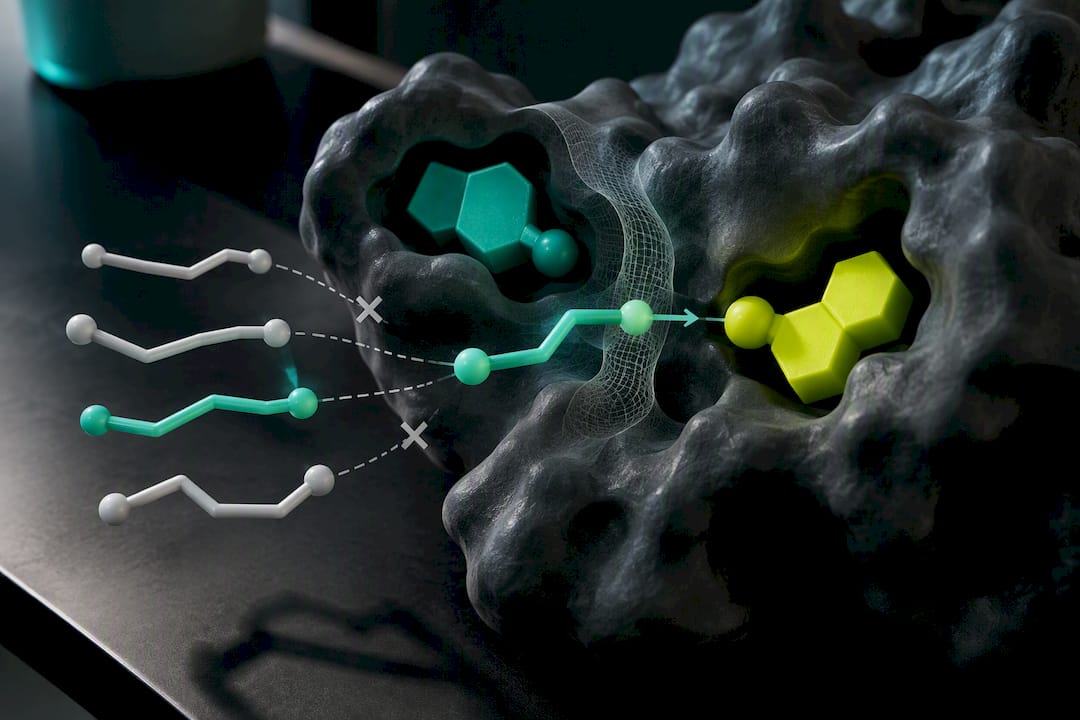
Sequence-based models trained on SMILES or molecular graphs propose chemically valid linkers quickly but without any inherent sense of 3D geometry, which matters enormously when the whole point is fitting a specific vector between two fixed fragment poses. Graph-based variational autoencoders (VAEs), including approaches like 3DLinker, improve on this by encoding some structural context directly into the generative process. E(3)-equivariant diffusion models, of which DiffLinker is the best known example, condition generation directly on the 3D coordinates of the fragment pair and the protein pocket, producing linkers that respect the actual geometric constraint rather than guessing at it from 2D connectivity alone.
Why does 3D conditioning matter this much? A model that only sees molecular graphs can propose a chemically sensible linker that's geometrically impossible, one that would require bond angles or torsions the actual atoms can't achieve in the bound state. Pocket-aware diffusion models bake the geometric constraint into generation itself, which is why benchmark comparisons consistently show them producing higher rates of pocket-compatible, synthetically valid output than earlier graph-construction methods.
Transformer-based generators add another layer. Tools like Linker-GPT incorporate reinforcement learning to optimize directly for QED, SAS, and other practical filters during generation rather than as a post-hoc screen, and reported computational benchmarks show meaningfully improved validity and synthetic-feasibility distributions from this reward-based fine-tuning compared to unconstrained generation.
Apply these filters to any AI-generated linker set before committing synthesis resources:
- Reject candidates with strain energy above roughly 3 to 5 kcal/mol in the bioactive conformer relative to the global energy minimum.
- Require QED and SAS scores in the ranges described above.
- Run a quick retrosynthetic feasibility check, manual or automated, before assuming a proposed structure is actually makeable.
The core limitation across every one of these tools is the same: generative models optimize for chemical plausibility and property distributions, not measured binding thermodynamics, so a top-ranked in silico candidate still needs experimental confirmation. Reviews of the field increasingly argue that constrained, physics-aware generation paired with experimental triage outperforms brute-force library enumeration, which is really the same lesson the thermodynamics section makes from a different angle. For background on the modeling infrastructure behind these tools, see this overview of generative AI drug design.
What Can Published Case Studies Teach You?
The clearest documented linking success in modern drug discovery, and one repeatedly cited in fragment-based drug discovery reviews, is venetoclax, where BH3-mimetic fragment hits were connected through iterative structure-guided optimization into a compound potent enough for clinical approval. The design choices that mattered weren't exotic: tight structural validation at every round, and linker chemistry chosen to minimize conformational penalty rather than maximize synthetic convenience.
The failure cases are just as instructive. In several published campaigns, a linker that looked geometrically sound in a static crystal structure introduced enough strain or binding-mode shift in solution to erase most of the expected potency gain, exactly the mechanism the Johns Hopkins linker-flexibility study documented directly.
Three lessons carry across nearly every case:
- Structural confirmation of the linked compound, not just the parent fragments, is non-negotiable before you trust a potency number.
- A linker that's geometrically plausible in a static structure can still be thermodynamically wrong in solution.
- Small, hypothesis-driven compound sets beat large combinatorial libraries for learning what actually works.
How Innovabiotech Supports a Fragment Linking Campaign
Running this workflow well requires structural biology, computational modeling, and synthetic chemistry to move in the same direction at the same time, which is where most academic and small-biotech teams get stretched thin. Innovabiotech's virtual screening and hit-to-lead service covers the structural triage and in silico linker proposal stages, generating and filtering candidates against strain, SAS, and QED criteria before any synthesis budget is spent.
For projects where the linked scaffold intersects with larger biologics or bifunctional constructs, protein engineering and chimeric protein design extends the same structure-first logic to the linker-geometry problems that come up in PROTAC-style molecules. A typical engagement runs structure intake, generative linker proposals, computational filtering, prioritized synthesis targets, and iterative experimental feedback as one continuous loop rather than four disconnected handoffs.
Where Is Fragment Linking Design Headed Next?
Unified generative frameworks that combine 3D-equivariant diffusion with transformer-based property optimization, in the spirit of recent FragmentGPT-style architectures, promise to collapse the current two-step process of "generate, then filter" into a single model that proposes linkers already screened for strain, synthetic accessibility, and drug-likeness simultaneously. That's a meaningful efficiency gain.
It doesn't close the real gap, though. Every one of these models still optimizes against computed proxies, not measured binding thermodynamics, and that validation bottleneck between in silico ranking and ITC or SPR data isn't going away soon. Research teams get more value from investing in orthogonal structural capacity, a second crystal form, a room-temperature dataset, an NMR backup, and reliable synthetic partnerships than from chasing marginal gains in generative model architecture. A workflow analogy worth borrowing from outside biotech: orchestrating a multi-stage pipeline only pays off when every stage feeds the next one clean data, and linker design is no exception.
— Hooman
Work With Innovabiotech on Your Next Fragment Linking Project
Most academic groups and small biotechs run fragment linking on borrowed computational time and whatever crystallography slot opens up next quarter. Such projects can be run as dedicated, confidential engagements involving structure intake, generative linker proposals filtered for strain and synthetic accessibility, and iterative validation cycles managed by a focused team that treats targets and intellectual property confidentially.
The service maps directly onto the workflow described above. Virtual screening and hit-to-lead optimization covers structural triage through computational linker filtering, while peptide design supports projects where the fragment pair sits on a peptidic scaffold rather than a small molecule. Every engagement runs under a confidential, project-based contract, so your fragment pair, your structures, and your linker candidates stay yours throughout. If your fragment screen has stalled at the linking stage, start a conversation about virtual screening services and get a scoped proposal for your specific target.
Sources
- Fragment linking is a structure-based drug design strategy (PubMed entry)
- General theory of fragment linking: why linking rarely succeeds (JCTC DOI)
- Fragment-based drug discovery review with case studies (PMC 2025)
- AI-driven frameworks for linker design (PubMed entry)
- Impact of linker strain and flexibility on binding (Johns Hopkins publication)
FAQ
What Is Fragment Linking in Drug Design?
Fragment linking is a structure-based technique that connects two weakly binding fragments occupying adjacent protein subpockets with a chemical tether to create a single, higher-affinity compound. It differs from fragment growing, which extends one fragment into empty pocket space, and from merging, which fuses overlapping fragments into one scaffold.
Why Does Fragment Linking Often Fail to Improve Potency?
Most linking attempts fail because the configurational entropy lost when two fragments are tethered together cancels out the translational and rotational entropy the strategy is supposed to save. Rigorous free-energy analysis identifies this entropy loss, along with intramolecular linker strain, as the dominant cause of underperformance.
Which Experimental Methods Confirm a Linked Compound Works as Designed?
X-ray crystallography or NMR confirms the linked compound retains each fragment's original binding mode, which matters more at first than the raw potency number. Isothermal titration calorimetry (ITC) and surface plasmon resonance (SPR) then add the enthalpy-entropy split and binding kinetics needed to catch strain or entropy problems that structure alone can miss.
Can AI Tools Like DiffLinker Replace Manual Linker Design?
AI models such as DiffLinker and transformer-based generators like Linker-GPT can propose geometrically plausible, synthetically accessible linkers far faster than manual enumeration, and 3D-conditioned diffusion models generally outperform older graph-based methods on pocket compatibility. They still require experimental validation, since none of them measure actual binding thermodynamics.
Does Innovabiotech Offer Fragment Linking Design Services?
Innovabiotech supports fragment linking campaigns through its virtual screening and hit-to-lead optimization service, which covers structural triage, computational linker generation, and filtering ahead of synthesis. Pricing is scoped per project and available on request.